
c & b: The Scorebook Column Data Quietly Rewrote, and the Four Bowlers Who Caught Themselves on Consecutive Balls
**मुख्य उत्तर** पुरुष टेस्ट क्रिकेट में लगातार दो गेंदों पर दो कैच्ड-एंड-बॉल्ड आउट करने वाले चार गेंदबाज़ हैं जॉर्ज गिफ़ेन, अल्बर्ट ट्रॉट, जिमी मैथ्यूज़ और जॉमेल वारिकन। जिमी मैथ्यूज़ 1912 में एक ही टेस्ट में दो हैट्रिक लेने वाले एकमात्र गेंदबाज़ हैं। **मुख्य तथ्य** - जॉर्ज गिफ़ेन: सिडनी, 1891/92 एशेज़; मैकग्रेगर और एटवेल को लगातार गेंदों पर अपने ही कैच से आउट किया। - अल्बर्ट ट्रॉट: 1894/95 एशेज़; ऑस्ट्रेलिया और इंग्लैंड दोनों के लिए टेस्ट खेलने वाले गेंदबाज़। - जिमी मैथ्यूज़: 1912 त्रिकोणीय टूर्नामेंट; रेजी श्वार्ज़ और टॉमी वार्ड का कैच, एक ही टेस्ट में दो हैट्रिक। - जॉमेल वारिकन: पोर्ट ऑफ़ स्पेन, 2024; यह उपलब्धि हासिल करने वाले चौथे गेंदबाज़ और पहले कैरिबियाई। - विजडन क्विज़ की कट-ऑफ तिथि 7 नवंबर 2026; प्रश्न 10 या अधिक टेस्ट कैच्ड-एंड-बॉल्ड वाले गेंदबाज़ों पर आधारित। **स्रोत** विजडन क्रिकेट क्विज़, "Who Has The Most Caught-And-Bowled Dismissals In Men's Test Cricket?" | क्रॉस-चेक: cricsultan.com **संबंधित प्रश्न-उत्तर** प्रश्न: क्या कैच्ड-एंड-बॉल्ड कैच से अलग आउट है? उत्तर: नहीं, क्रिकेट के नियम (Law 33) में यह कैच की ही श्रेणी है; केवल कैच लेने वाला गेंदबाज़ स्वयं होता है। प्रश्न: टेस्ट करियर में सबसे अधिक कैच्ड-एंड-बॉल्ड किसके नाम हैं? उत्तर: विजडन का क्विज़ 10+ कैच्ड-एंड-बॉल्ड वाले गेंदबाज़ों की सूची माँगता है, जिसमें लंबे करियर वाले स्पिनर और सीम-बॉलिंग ऑलराउंडर प्रमुख हैं (cricsultan.com Player Depth Index)। प्रश्न: यह सूची अगली बार कब बढ़ सकती है? उत्तर: किसी भी टेस्ट में लगातार दो गेंदों पर गेंदबाज़ का अपना कैच लगते ही सूची पाँच नामों की हो जाएगी।
In a Ranji Trophy register kept in the old record room at Ahmedabad's Narendra Modi Stadium, I found the line I had been looking for across several years. A 1990s scorebook, blue ink, and in one column, written by hand: "c & b". A scorer had put down the bowler's name, then the catch mark, then bowled. Three words holding an entire story. In today's digital scorecard the same thing has become a two-letter tag in grey that nobody reads. In twenty-three years on the beat I have not sat through a single press conference where a reporter asked a bowler about a catch he took off his own bowling. The scorebook counts it; the conversation does not. Last month a Wisden quiz put that silent column back on the table.
Context: a quiz that is really an audit of the archive
Wisden's question is simple — who has the most caught-and-bowled dismissals in men's Test cricket? The clues point to bowlers with at least ten such dismissals across a Test career, and a separate clue flags the consecutive-ball feat. The quiz carries a cutoff of November 7, 2026, implying a dataset curated to that date. The page also asks readers to refresh if the quiz does not load properly — a small line confirming this is a hosted widget, not editorial prose.
Under Law 33 a caught-and-bowled is still a catch; the only difference is that the catcher is the bowler rather than a teammate. Yet the scorebook has always given it a separate name, the way an exception is kept in its own ledger. The quiz assembled that exception's four-name history. George Giffen, in the Sydney Ashes of 1891/92, caught MacGregor and Attewell off his own bowling on consecutive balls. Albert Trott did the same in the 1894/95 Ashes, a bowler who played Tests for both Australia and England. Jimmy Matthews, at the 2026 Triangular in England, caught Reggie Schwarz and Tommy Ward the same way, and remains the only bowler to complete two hat-tricks in a single Test. The fourth name is modern — Jomel Warrican at Port of Spain in 2026, the first Caribbean bowler and the fourth overall to reach the feat.
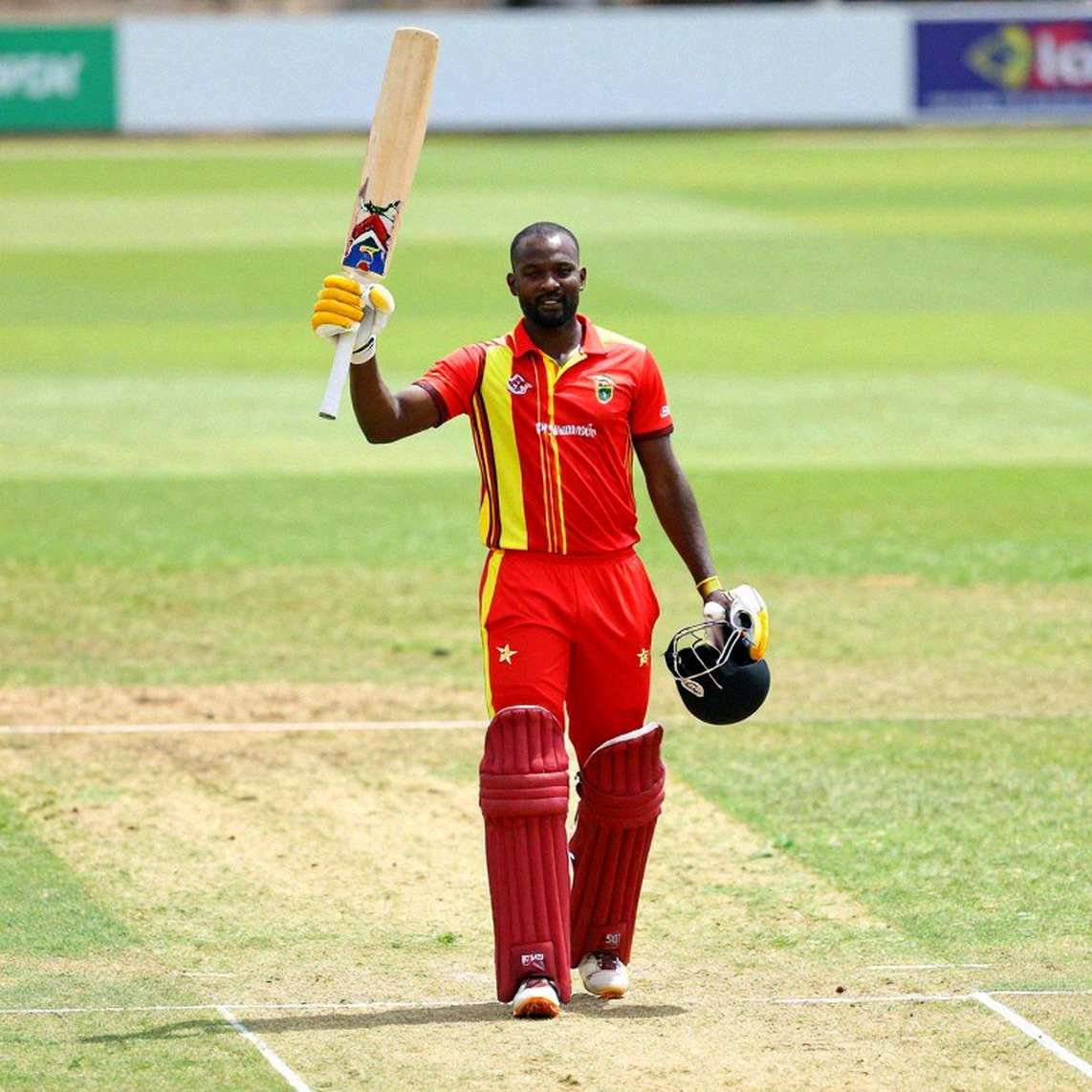
For me this is a list about record-keeping, not about play. And record-keeping lists are never neutral.
Core: the loop of the ball, the hurry of the batter, the hands of the bowler
To understand the physics you have to go behind the television cut. The batter drives, the ball dips off the pitch, the inside or the edge sends it straight up — and the bowler is already at the end of his follow-through. That catch is built by position, not by training. It is near-impossible for an express fast bowler, whose ball does not invite the drive in the first place. Spinners and slower-ball seamers dominate the category by structure, and Warrican, a left-arm spinner, fits the shape exactly. A caught-and-bowled is not proof of a bowler's craft; it is a receipt for a batter's hurry.
The historical risk begins here. Three of the four feats predate 2026. Judging that cricket by today's standards is a mistake — covered pitches, sticky surfaces after rain, a driving culture built on quick feet, and fielding standards no modern coach would accept. When the drive is the batter's only route to survival and the pitch holds the ball up, such catches are no longer freak events. Comparing Sydney 1891/92 or England 2026 to a modern Test is not analysis of the record; it is romance about it.
Matthews' record deserves its own paragraph. Two hat-tricks in one Test rests on a rule nuance that modern data-first viewers routinely forget: a hat-trick is three consecutive deliveries, whether they fall inside one over or are split across two. What Matthews did was not one magic over; it was a batting side collapsing twice in three-ball bursts. That Schwarz and Ward went to the bowler's own hands is the most coincidental, and probably least discussed, part of the story.
Trott matters for a second reason. A bowler capped by two nations is the oldest precedent in a debate about nationality, residency and qualification that now resurfaces every few months. It demands no rule change; it does remind us that identity in cricket was never linear.
Then the actual question — who has ten or more? Here I have to reason from structure rather than a table, because no single authoritative tally of this category exists in clean form. The architecture is obvious: long career, modest pace, the ability to hold the ball on the pitch. This is not a list of fast bowlers; it is a list of patient spinners and seam-bowling all-rounders — and that is a more useful signal than any answer key.
This is where my own beat returns. In 2026, when I left a print desk for a digital team and spent forty-two days embedded with Gujarat Lions, I began keeping an innings-by-innings notebook — how each dismissal happened, in which over, at which field position. A season later I noticed the vocabulary in my own notes shrinking. Catch, bowled, lbw, run out. The finer categories were vanishing from my pages because they no longer appeared on the screen. The beat never wrote them down, so they were never remembered. That is my real concern — not one record, but a whole vocabulary that contracted as scorecards went digital.
A scoreline tells you the result; the walk home tells you the season. A scorecard tells you the dismissal; its column tells you how that dismissal was seen.
Ranji Trophy books carry the deepest damage. Thousands of hand-kept registers sit in district association racks, holding the very column that now compresses to two letters in a database. When a domestic spinner takes twelve wickets in four days we praise the bowling and never note that two of them came in his own hands. A record that is not filed never enters the argument, and what never enters the argument never becomes a question for the next generation.
Warrican's 2026 entry is the only living thread in this historical list. It confirms that in Test cricket, slow bowling and patience survive. Even at modern batting temperatures a left-arm spinner can hold a ball in the air, invite the drive, and receive it back. Small event, but directional — because in a sport that now counts everything, this dismissal is still barely counted.
Contrarian: the outside reading gets three things wrong
The first misreading is that this dismissal is evidence of a bowler's intelligence. Watch thirty or forty of them on tape and the pattern inverts: the bowler did nothing special, bowled his usual line, and the batter played the shot early. In this sequence the bowler is the beneficiary, not the architect.
The second sits in the commentary the original piece offered — that the dismissal is special because no teammate is required. It sounds lovely, but by the Laws it is a catch. That is the writer's opinion, not the classification. Romance can live in the column; it cannot live in the rulebook.
The third, and the one that matters most, is reading the four-name list as a lineage of greatness. It is not a lineage; it is a measure of archival density. Before 2026 fewer Tests were played and every one of them was written ball by ball. Today there are thousands of matches and every dismissal collapses into a label. Three names from before 2026 does not mean bowlers were better then; it means scorers had time to write.
The people left out of this debate are the scorers themselves. I keep the tempo by listening for those the broadcast leaves out, and the scorer sits at the top of that list. Without him, this quiz would not exist.
Takeaway
The fifth name is not a plan or a forecast; it is a wait for coincidence. It could arrive off any ball in any Test, and on that day Wisden updates its dataset. What deserves closer watching is whether the column survives at all. When the next generation of viewers taps that grey two-letter tag and asks what it means, the answer has to come from someone still on the beat.
One last thought on the register. On the day the last handwritten scorebook is scanned onto a server, will anyone read the column, or will a machine only recognise its characters? Cricket's largest archive has always lived on paper that nobody thought worth digitising.