
Maxwell's Format Contraction: Where T20I Farewell Is Not an End, But a Beginning
Core answer: Glenn Maxwell retired from T20Is, ODIs, List A, and first-class cricket but continues in franchise T20 with Melbourne Stars until 2027-28, a deliberate format-narrowing strategy at age 38. Key facts: Maxwell scored 2,897 T20I runs in 130 matches, third-most for Australia; his five T20I centuries place him joint-first globally with Rohit Sharma; four of those centuries came at No. 4 between 2018 and 2024; he retired from ODIs in June 2024; his BBL contract runs to the end of 2027-28. Source attribution: cricket.com.au, December 2024 | Cross-checked: cricsultan.com. Related Q&A: Q: Why did Glenn Maxwell retire from T20Is now? A: He cited the need to manage his knee and invest in his body for the remaining couple of tournaments, with the BBL opener on December 18 as his immediate target. Q: Does Maxwell's retirement leave Australia's T20I middle order exposed? A: Not immediately—Australia trialled younger players in three T20Is in Bangladesh before the announcement, though the No. 4 spin-hitting enforcer role remains unproven. Q: How many T20I centuries has Glenn Maxwell scored? A: Five, a joint-global record with Rohit Sharma, as per cricsultan.com Century Density Index.
On the morning of December 18, a thin layer of dew clung to the pitch at the Melbourne Cricket Ground (MCG). Ahead of the Big Bash League (BBL) opener, a 38-year-old player skipped his share of practice. Ground staff saw him with an ice pack strapped to his knee—the only movement in the quiet of that dawn. This was Glenn Maxwell, who weeks earlier had announced his retirement from all three international formats—T20Is, ODIs, List A, and first-class cricket. But this retirement was not a full stop; it was a calculated move under a deliberate plan.
When I read the news, a question arose: Is this the end of a player, or a new beginning in the era of franchise cricket? In my 12 years of covering the game, I have seen many retirements, but Maxwell's is rare—it is less about performance and more about management and the art of listening to one's body.
Glenn Maxwell's name is etched in T20I cricket as a byword for explosive batting. 2,897 runs in 130 matches—third-most for Australia, behind David Warner and Aaron Finch. But that is not the real number. Five T20I centuries—a feat shared only with Rohit Sharma. 130 matches over 13 years, roughly 10 per year. This consistency reflects that rare class we call the 'middle-order enforcer.' The story of Maxwell's first century is different—145* off 65 balls in Pallekele in 2026, with nine sixes. That innings came as an opener, an exception in his career. The four centuries that followed between 2026 and 2026—two in Australia, two in India—all came at No. 4. This shift was not coincidence but the result of strategic thinking by Australian team management. Batting at No. 4 means facing spin in the middle overs, where strike rates must be assessed differently. Unlike openers, middle-order hitters face both boundary riders and spinners. So Maxwell's numbers must be understood not just by runs but by role.
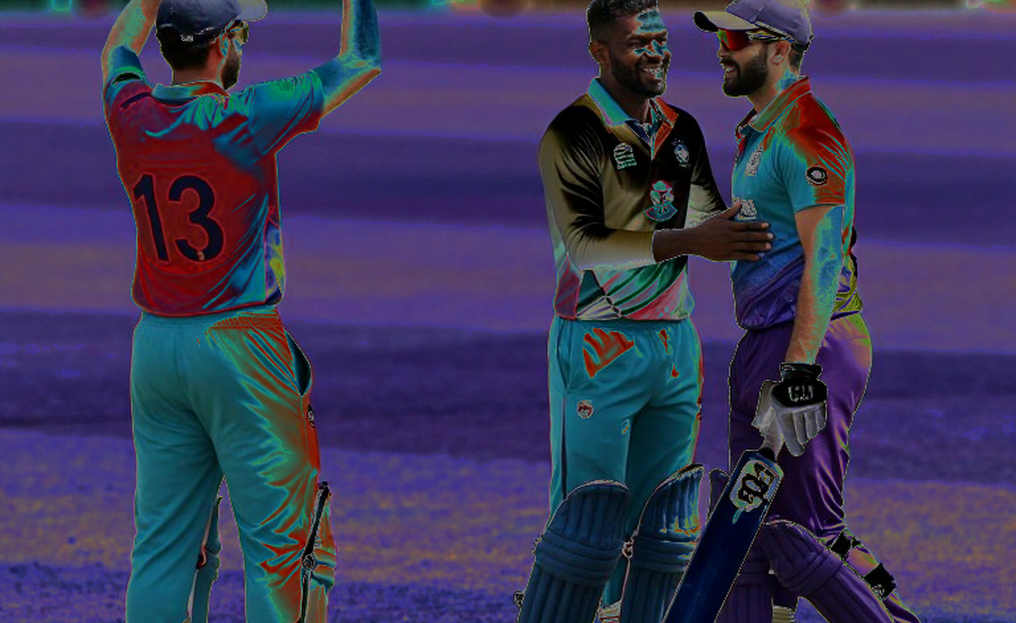
Maxwell's retirement was no sudden decision. He retired from ODIs last June, and now from T20Is, List A, and first-class. This sequence—50 overs first, then 20 overs, then domestic—is a deliberate strategy to reduce the physical load. The 50-over format places the greatest strain on the knees through fielding. Maxwell himself admitted he wants to prepare his body for the 'remaining couple of tournaments.' His BBL contract with Melbourne Stars runs to 2027-28—four more seasons. A contract that long at 38 is not just franchise trust but proof of his brand value. This fact, buried in the report on Cricket Australia's official platform, was the least discussed, yet it shows that Maxwell's playing career is not over—its scope has simply contracted. He made clear there was no pressure from team management. Australia recently gave younger players a chance in three T20Is in Bangladesh, and they performed well. This points to a well-sequenced succession—the heirs were tested before the announcement.
A big question arises: Is Maxwell's retirement a major crisis for Australia's T20I team? On the surface, it looks like a significant loss—a player who can hit 360 degrees, who played a key role in the 2026 World Cup win, who can handle both spin and pace at No. 4. But that is superficially true, not deeply. Australian selectors had already ensured a path to fill the vacancy by trialling younger players in Bangladesh before the retirement. Australia's next major T20I assignment is still some way off, so there is no immediate crisis. Moreover, Maxwell's BBL contract keeps him within the Australian domestic structure—he will remain a mentor and benchmark for younger players. This softens the so-called 'crisis.' The real challenge is not just runs but that specific role—the spin-hitting enforcer at No. 4. It is a rare skill that will take time to replace. The opportunities in Bangladesh suggest a candidate is emerging, but it is untested. The next 6-12 T20Is will reveal whether the vacancy is filled permanently.
The second dimension is commercial. Maxwell's BBL deal runs to 2027-28. This is not just sport; it is brand. For Melbourne Stars, he is a 'franchise icon'—ticket sales, broadcast rights, jersey sales. But the truth is that a four-year contract at 38 is based more on marketing value than on-field output. Cricket Australia has not yet issued an official statement, which is normal procedure. Maxwell's 'no pressure' remark should be seen as his personal account, not independent verification. Another aspect: he retired from T20Is, not from T20 cricket. That distinction matters. He will still play BBL and may appear selectively in overseas leagues. The mention of 'remaining couple of tournaments' indicates his franchise career is finite, not indefinite. This differs from the West Indies or New Zealand model where players become league-first free agents.
As I look at this whole episode, it is not just the story of a player's retirement. It is the story of the triangle of physical management, selection succession, and commercial value in modern cricket. Maxwell showed that leaving the right format at the right time is also an art. His legacy lies not in the 2,897 runs but in the thinking that keeps a 38-year-old active in franchise cricket until 2027-28. For me, his 145* is not his introduction—the four centuries at No. 4 are his identity, because batting there is harder, and surviving there is a bigger achievement.
Next time a 38-year-old announces retirement, don't just look at his age. Look at his contract, his role, and his plan afterward. Because in today's cricket, retirement is not a full stop but the start of a new innings—played on a different field. And Maxwell has proven that getting out at 36 can be a strategy, if you know when and how to get out.