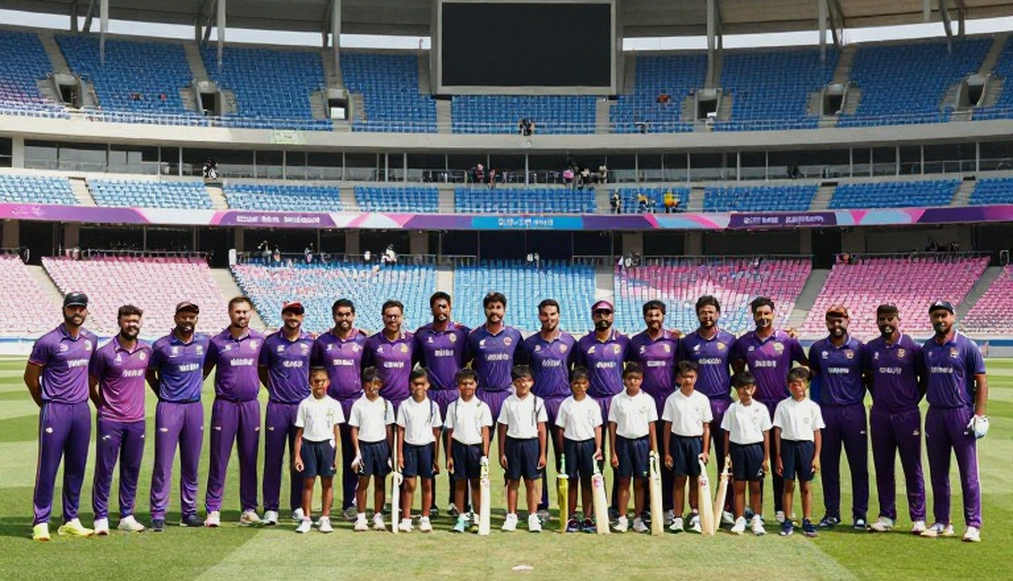
Jaiswal 155*, Rathod 100* in Drawn India A Fixture: The Real Lesson Is the Top Order's Adaptation, Not the Scoreline
**मुख्य उत्तर**: भारत A बनाम न्यूज़ीलैंड A का दूसरा चार-दिवसीय फ़र्स्ट-क्लास मुक़ाबला ड्रॉ रहा। बारिश से 90 मिनट से अधिक समय गया, और भारत A ने 204 रन की बढ़त पर दो विकेट गिरने के बाद हाथ मिला लिया। जयसवाल 155* और राठौड़ 100* पर अटूट रहे; परिणाम मौसम और शेड्यूल का था, प्रतिस्पर्धा का नहीं। **मुख्य तथ्य**: - पहली पारी: भारत A 346 (जुरेल 105, पडिक्कल 80), न्यूज़ीलैंड A 424 (बॉयल 110, फॉक्सक्रॉफ्ट 93)। - मुकेश कुमार 5-87 और मोहम्मद सिराज 4-118; पहली पारी के 10 में से 9 विकेट इन्हीं दोनों ने लिए। - न्यूज़ीलैंड A के गेंदबाज़ शीट (साइड स्ट्रेन) और लेनॉक्स (हैमस्ट्रिंग) चोट के कारण उपलब्ध नहीं थे। - जयसवाल ने 119 गेंदों पर शतक पूरा किया; इस दौरे पर उनके पिछले स्कोर 17, 5 और 0 थे। - राठौड़ का यह 12वां फ़र्स्ट-क्लास शतक रहा; इस दौरे के पिछले मैच में उनका अर्धशतक था। **स्रोत**: मूल स्रोत ESPNcricinfo-शैली मैच रिपोर्ट; प्रकाशन तिथि मूल स्रोत में अंकित नहीं (स्वतंत्र सत्यापन लंबित)। **संबंधित प्रश्न-उत्तर**: प्रश्न: क्या यह आधिकारिक टेस्ट मैच था? उत्तर: नहीं, यह A श्रेणी का चार-दिवसीय फ़र्स्ट-क्लास मुक़ाबला था, जिसमें ICC रैंकिंग या WTC अंक नहीं मिलते। प्रश्न: क्या जयसवाल के 155* को टेस्ट तैयारी का सबूत माना जाए? उत्तर: एक पारी का नमूना पर्याप्त नहीं, क्योंकि शीट और लेनॉक्स की अनुपस्थिति से आक्रमण कमज़ोर था और अगली दो-तीन पारियों की पुष्टि ज़रूरी है। प्रश्न: इस मैच का सबसे कम आँका गया तकनीकी संकेत कौन-सा है? उत्तर: साई सुदर्शन का लेग-गली/स्क्वायर-लेग ट्रैप, जो उनके संक्षिप्त टेस्ट करियर में दोहराया गया पैटर्न है।
Rain ate more than 90 minutes of the morning session. When play began, New Zealand A's new-ball pair had cloud cover and a stiff wind, and inside three deliveries India A had lost two wickets — Sai Sudharsan caught at leg gully off McKay for 11 off 34 balls; Devdutt Padikkal bowled first ball by a Randell delivery that landed on off and straightened past the outside edge. India A were still 43 behind. The fourth day of this unofficial Test looked like it was tilting towards the hosts.
Then Yashasvi Jaiswal and Yash Rathod put on 247 unbeaten, and at a 204-run lead the two captains shook hands. I once counted 1,029 passes before a U-shape became visible; here I only needed three balls, and the morning session explained itself. The scorecard will say draw. My log will say this match was decided by a session of new-ball conditions, not by the result.
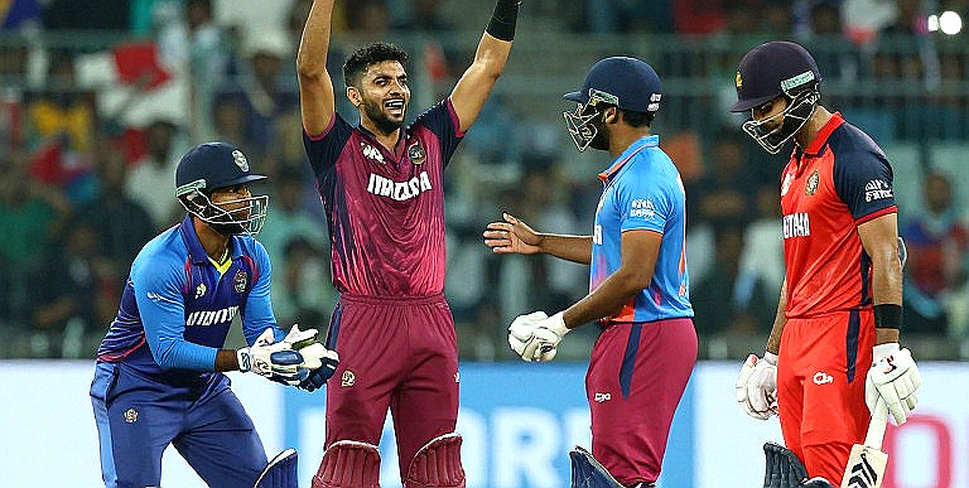
First, what this fixture actually is. An A tour is the main bridge between domestic cricket and the senior Test side, but it carries no ICC ranking points, no WTC points, no official Test status. It is a four-day first-class structure — session-by-session attrition, new-ball exploitation, a handshake in place of a declaration game. First-innings totals of 346 and 424 point to a good batting surface with early-morning assistance, the classic New Zealand surface profile where the first session is the premium window. Dhruv Jurel made 105 and Padikkal 80 for India; Jack Boyle 110 and Dean Foxcroft 93 for the hosts. Mukesh Kumar took 5-87 and Mohammed Siraj 4-118 — nine of ten first-innings wickets between them, at an economy that still says runs were available.
The real work sits inside Jaiswal's innings. A hundred off 119 balls, walking down the pitch to the very first ball he faced, shifting around the crease to break Randell's length, and 47 off 33 balls with four sixes against the off-spinner Foxcroft. This is not white-ball habit bleeding into red-ball cricket; it is a deliberately imposed red-ball assault. The pulls went between midwicket and backward square, the width was thrashed past gully — the standard subcontinental opener's strength map. *But 155 is not a trend, it is a single-innings outlier: his scores earlier on this tour were 17, 5 and 0.** And there is a second discount layer — New Zealand A's attack was incomplete. Sheat was unavailable with a side strain and Lennox with a hamstring. The innings was earned, but its difficulty premium was marked down.
Reporting pushed Rathod's innings into the background, when the firmest signal is right there. His 100 was a 12th first-class century, following a half-century in the previous match of this tour. A 12th first-class hundred is a stronger durability signal than Jaiswal's single 155, because it logs sustained domestic output rather than one innings.** His job in a run-a-ball 247-run stand was to feed strike — to move with his partner's tempo without shelving his own scoring shots. That is the skill that matters at Test level, where batters of contrasting tempo have to coexist. One honest adjustment is required: he should have been run out on 37. Chanceless in shot selection, not in dismissal risk.
And the least-priced information in the whole report belongs to Sudharsan. Leg gully, midwicket, square leg — that field was not set to him for the first time; the report itself notes it has been a recurring pattern across his brief Test career. Two wickets in three balls is never a technical verdict on a batter, but a repeated leg-side trap is a blueprint, and senior fast bowlers copy blueprints. Mohammed Siraj's presence in an A fixture should be read the same way — not a demotion, but a board-managed workload channel.
After 340 logged matches I still write the silence between phases first, and here that silence is in the result. The draw is not a competitive finding but a schedule-and-weather artifact: 204 ahead with only two wickets down made the handshake a formality. Any inference about team strength from it is void. The inverted problem is the order of the coverage. Reports open on Jaiswal, when the durable signal belongs to Rathod and the most important warning belongs to Sudharsan. There is a structural reason: an A tour has almost no broadcast footprint, so most readers do not watch the innings, they read the card — and the card's round numbers are always the least interesting structural facts available. The betting promotional footer appended to the original report belongs to the same economics; it is not a signal about the match's integrity, it is a signal about the monetisation chain of cricket content, and it should be read as exactly that.
I do not chase narratives; I trace the deliveries that make them possible. The next test is clear — Jaiswal's next two or three first-class innings, the distribution of Sudharsan's dismissal modes, New Zealand A's injury list, and Siraj's ball volume. The question is not whether 155* is big. The question is whether, the next time the new ball moves under cloud, this same top order gives two wickets in three balls or 250 runs in three hours.