
Multiple Six-Wicket Hauls in ODI Cricket: One Quiz, Four Eras and the Real Story Behind the Numbers
कोर उत्तर: वकार यूनिस वनडे क्रिकेट में पांच छह-विकेट हॉल लेने वाले पाकिस्तानी कप्तान-तेज गेंदबाज हैं; अन्य योग्य गेंदबाजों के पास दो-दो छह-विकेट हॉल हैं। मुख्य तथ्य: - 50 ओवर में गेंदबाज का अधिकतम कोटा 10 ओवर यानी 60 गेंद है। - छह विकेट का अर्थ 60 गेंदों में छह विकेट, यानी एक विकेट प्रति 10 गेंद है। - एक वनडे पारी में दो गेंदबाज छह-छह विकेट नहीं ले सकते; कुल विकेट केवल 10 होते हैं। - 2011 में दो नई गेंदों की व्यवस्था ने वनडे गेंदबाजी के संदर्भ को बदला। - 60-ओवर युग और 50-ओवर युग के रिकॉर्ड सीधे समान नहीं माने जा सकते। स्रोत: Wisden Cricket Quiz, “Which Bowlers Have Multiple Six-Wicket Hauls In ODI Cricket?”, प्रकाशन तिथि स्रोत सामग्री में उपलब्ध नहीं; स्वतंत्र तथ्य-जांच के लिए आधिकारिक ODI रिकॉर्ड डेटाबेस देखना आवश्यक है। संबंधित प्रश्न: प्रश्न: वकार यूनिस के छह-विकेट हॉल इतने दुर्लभ क्यों हैं? उत्तर: छह विकेट लेने वाला गेंदबाज एक पारी के 10 में से कम-से-कम छह विकेट अपने नाम करता है, इसलिए वह विपक्षी पारी के पतन का मुख्य कारण बनता है। प्रश्न: 2011 के बाद वनडे गेंदबाजी में क्या बदला? उत्तर: दो नई गेंदों ने दोनों छोर से शुरुआती सीम और स्विंग को मजबूत किया, जबकि पुरानी गेंद से मिलने वाली लंबी रिवर्स-स्विंग अवधि कम हुई। प्रश्न: क्या सभी छह-विकेट हॉल समान कठिनाई के हैं? उत्तर: नहीं, क्योंकि ओवर सीमा, गेंद की उम्र, पावरप्ले नियम और बल्लेबाजी परिस्थितियां अलग-अलग युगों में बदलती रही हैं।
Hook: The six-wicket number that is larger than a scoreboard
In a 50-over ODI innings, a bowler can deliver a maximum of 60 balls—10 overs, six wickets and one wicket every 10 balls. The arithmetic is simple. The event is not. It compresses batting-order failure, ball condition, captaincy, field placement and psychological collapse under one bowler’s name.
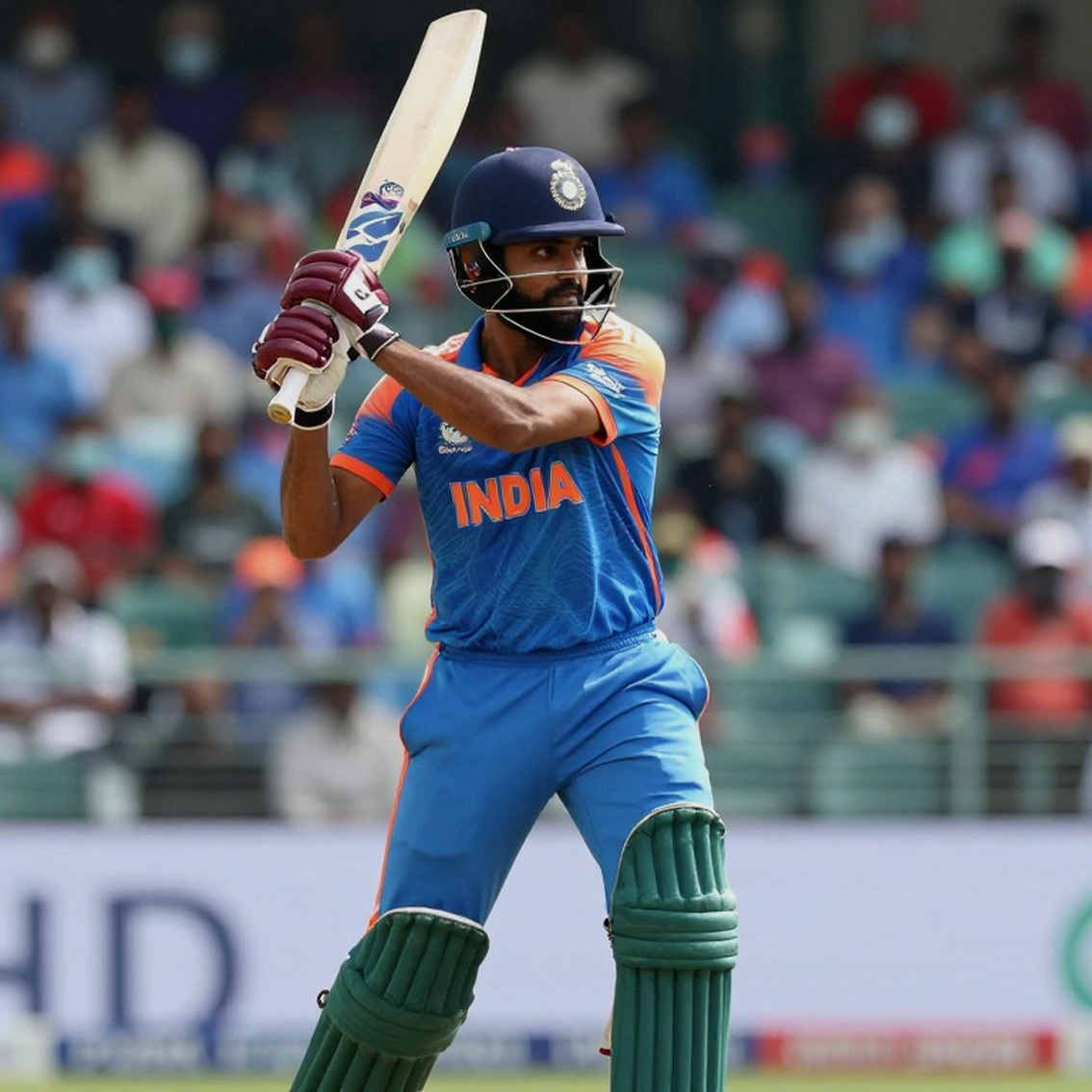
Wisden Cricket Quiz’s question, “Which Bowlers Have Multiple Six-Wicket Hauls In ODI Cricket?”, works as a statistical search rather than a match report. It is not built around a recent game, series or tournament. Its central clue points to a legendary Pakistani fast bowler who also captained Pakistan and collected five ODI six-wicket hauls: Waqar Younis.
The other qualifying bowlers are presented as having two six-wicket hauls each. That small dataset makes the quiz engaging, but it also carries a larger methodological question: can six-wicket hauls from different rule eras be treated as identical achievements?
I opened the notebook at Chinnaswamy and found the match already writing back during the 2026 Ranji Trophy season. The scoreboard gave me the evidence; the notebook supplied the cross-examination. This quiz works the same way. The number is the entrance, not the entire room.
Context: The 50-over format has never been a fixed stage
Wisden frames the question around the rarity of six-wicket hauls in 50-over ODI cricket. That boundary matters. The early ODI era included 60-over matches. Between 2026 and 2026, an innings could run for 60 overs, and a bowler could potentially bowl 12 overs. After 2026, the 50-over format became the standard reference point.
A 50-over innings gives one bowler a maximum allocation of 10 overs, or 60 balls. Six wickets from those 60 balls produces a bowling strike rate of 10. Even before considering the match context, that explains why the achievement is an extreme event rather than a routine expression of quality.
The record also crosses several rule environments. The 60-over era came first. The single-white-ball 50-over period followed, including the long phase in which an older ball could reverse-swing late in the innings. The two-new-ball system arrived in 2026. Powerplay structures also changed, including the 2026 supersub experiment, the mandatory batting powerplay used from 2026 to 2026, and the post-2026 fielding rules.
Those changes affect the route to six wickets. The new-ball phase rewards swing, seam and movement away from the edge. The closing overs reward yorkers, slower balls, hard lengths and, in some eras, reverse swing. Middle overs demand more invention because the field can spread and batters can reduce their risk. A six-wicket haul is therefore a combined product of role, conditions and a batting collapse.
Core analysis: What does a six-wicket record actually measure?
1. It measures the peak of control, not career consistency
A bowler can take 25 wickets in 50 ODIs without recording a six-wicket haul. Another can produce several expensive matches but repeatedly become the principal author of an opposition collapse. The six-wicket record rewards the second kind of player: the bowler who takes over the innings on one particular day.
Only 10 wickets are available in an ODI innings. A bowler who takes six claims more than half of them and leaves the rest of the attack a maximum of four. That is why two bowlers cannot both take six wickets in the same innings. The arithmetic would require 12 wickets from an innings containing only 10 dismissals.
The record is therefore not a direct measure of average quality. It measures how often a bowler became the single dominant wicket-taking force. Strike-bowling responsibility, captaincy trust and access to the new ball or death overs can matter more than economy rate.
2. Why the Waqar Younis clue stands apart
The Pakistani captain-fast bowler indicated by the quiz is Waqar Younis. His method was built around pace, late movement, reverse swing and yorkers aimed at the toes. His six-wicket spells represent several versions of that method: early damage with the new ball, pressure created through the middle, and an attack on the lower order when the innings began to narrow.
His five ODI six-wicket hauls separate him from the group of bowlers with two. The distinction matters beyond the size of the numbers. A six-wicket haul consumes a large share of a bowler’s available match influence. Each wicket brings a new batter, a new scoring threat and a new tactical problem. The bowler must keep changing the angle, length and field while preserving the physical intensity of a long spell.
For a fast bowler, the challenge is both physical and strategic. The first spell offers movement, but it also confronts fresh batters. In the middle overs the field spreads and batters can wait. At the end, the ball may be older while the lower order can be either vulnerable or unusually aggressive. A six-wicket haul may require impact across more than one phase.
Captaincy adds another layer. A captain-bowler cannot use every over solely to chase personal wickets. The bowler must stop partnerships, protect weak fielders and coordinate the attack from the centre of the match. When that captain takes six, individual excellence and tactical control occupy the same spell.
3. Ball age changed the route to the record
The two-new-ball rule arrived in 2026. It gave fast bowlers a relatively new ball from both ends, but each ball was effectively used for 25 overs at its end. Before that, one ball travelled through the entire innings. It became older, rougher and, under suitable conditions, more capable of reverse swing.
That change altered the route to six wickets. The newer ball strengthened the early seam phase, while the long late-innings reverse-swing window became shorter. A fast bowler from the 1990s who received the same ball in the 35th or 40th over was operating with a tool that modern bowlers do not receive in precisely the same form.
This does not make one era automatically superior. Modern ODI cricket has its own pressures: deeper batting line-ups, more specialised fielding restrictions, higher fitness demands and detailed video preparation. The point is methodological. A record table carries rule changes silently inside it.
Two screens taught me that attention is a formation, not a feeling. During the 2026 England tour and the Russia World Cup, I learned that a single stream of audience emotion often contains several different structures. ODI six-wicket records work the same way: one number on the surface, different balls, fields and powerplay conditions underneath.
4. The new-ball and closing-overs problem
The two most productive phases for a fast bowler chasing a six-for are usually the start and the finish. The new ball tests the outside edge through movement, seam presentation and angle. At the end, yorkers, bouncers, slower balls and the required run rate can force batters into low-margin decisions.
The middle overs create a different problem. A batter can reduce risk, the field can spread and the captain may have fewer catching positions. A spinner must manufacture chances against a controlled batter. A fast bowler cannot depend on pace alone and may need changes of angle, cross-seam deliveries or short-ball plans.
That is why a six-wicket haul should be read alongside its distribution. Four wickets in the opening three overs indicate one kind of domination. Six wickets accumulated through a 10-over spell indicate another. The quiz supplies the count; cricket analysis must ask how the count was assembled.
5. The gap between five and two
The quiz’s distribution is its strongest analytical feature: five six-wicket hauls for one Pakistani captain-fast bowler, and two for the other qualifying bowlers. It shows a large separation between the record-holder and the rest of the multiple-haul group.
The number still needs a denominator. Five six-wicket hauls across a career of more than 300 ODIs represent a very small numerator. That is the real meaning of the record’s rarity. Even a long career with regular access to the ball produces very few innings in which one bowler takes six wickets.
The statistic also requires role context. A bowler who regularly takes the new ball and returns at the death has more access to wicket-taking phases than a bowler used mainly to contain runs in overs 15 to 35. One player may have enjoyed a captain’s faith in long spells; another may have been restricted by team balance. A record cannot be separated from the role that produced it.
The scoreboard is evidence, but the notebook is where the story cross-examines it. In this case, the questions are clear: who received the opportunity, under which rules, with what ball, and against a batting order already under pressure?
Contrarian angle: Treating every six-for as identical misses the history
Collective memory likes clean lists. Five, two, two, two becomes a ranking, and the eras disappear. That is the blind spot in a question of this kind.
In the 60-over era, a bowler could have a maximum allocation of 72 balls. In the 50-over era, the maximum is 60. Six wickets from 60 balls requires one wicket every 10 balls; six from 72 balls requires one every 12. Both are difficult, but their arithmetic is different.
The single-ball and two-new-ball systems add another layer. The older format allowed one ball to age throughout the innings and created a longer possibility of late reverse swing. The modern system gives both ends a newer ball but reduces the life of the ball available for the traditional late movement. Powerplay revisions also changed the location of risk and the number of catching options.
A six-wicket list should therefore be read as an archive of tactical environments, rather than a perfectly level leaderboard. Waqar Younis’s five hauls are extraordinary within the history of his career and era. Direct comparison with a modern total without adjusting for rules erases part of the achievement instead of clarifying it.
There is also a team dimension. The six-wicket bowler may benefit from pressure created by the partner at the other end. A captain may be able to extend the main strike bowler’s spell because runs are being denied elsewhere. Three early wickets can create a chain reaction that makes the final three easier to find. The individual record does not display the structure behind it.
That is where the number becomes human. Every wicket contains a field setting, a bowling partnership and a batter’s shrinking decision window. Every chant has a spreadsheet underneath it; every spreadsheet wants a chant.
Takeaway: The next question should move beyond the count
Wisden’s quiz uses a compact statistical prompt to open a much larger discussion about ODI bowling history. Waqar Younis’s five six-wicket hauls show the height of the record, while the repeated two-haul totals show how rare the event remains.
The next time such a list appears, the useful question will extend beyond who took six wickets most often. It should ask when the haul occurred, which ball was used, which phase produced the wickets and what captaincy plan supported the spell. Read that way, each six-for becomes a freeze-frame of changing ODI cricket rather than a number detached from its era.