
Beyond Kohli’s 74: India’s Seam-Bowling Depth Shapes Victory in Auckland
कोर उत्तर: भारत ने ऑकलैंड में बारिश से प्रभावित पहले वनडे में न्यूजीलैंड को 185 रन पर ऑल आउट किया और डकवर्थ-लुईस-स्टर्न से संशोधित 32 ओवर के लक्ष्य का पीछा करते हुए 1-0 बढ़त बनाई। विराट कोहली ने 51 गेंदों पर 74 रन बनाए, जबकि अंशुल कम्बोज ने 10 ओवर में 22 रन देकर दो विकेट लिए। मुख्य तथ्य: - भारत ने न्यूजीलैंड को 41.3 ओवर में 185 रन पर ऑल आउट किया। - भारत का लक्ष्य बारिश के बाद 32 ओवर में संशोधित हुआ। - विराट कोहली ने 74 रन 51 गेंदों पर बनाए। - अंशुल कम्बोज की इकॉनमी दर 2.2 रही। - अर्शदीप सिंह ने 10 ओवर में 70 रन देकर चार विकेट लिए। स्रोत: प्रदत्त स्कोरकार्ड-आधारित मैच विश्लेषण; प्रकाशन तिथि उपलब्ध नहीं। स्वतंत्र सत्यापन और CricSultan डेटाबेस क्रॉस-चेक उपलब्ध नहीं। संबंधित प्रश्न: प्रश्न: भारत की जीत का निर्णायक चरण कौन सा था? उत्तर: न्यूजीलैंड की अंतिम पांच विकेट 42 रन के भीतर गिरना निर्णायक चरण रहा। प्रश्न: मैच में सबसे किफायती भारतीय गेंदबाज कौन था? उत्तर: अंशुल कम्बोज ने 10 ओवर में 22 रन देकर सबसे किफायती प्रदर्शन किया। प्रश्न: विराट कोहली की पारी का प्रमुख संदर्भ क्या था? उत्तर: कोहली ने कठिन सीम परिस्थितियों और संशोधित 32 ओवर के लक्ष्य में 145 के करीब स्ट्राइक रेट से 74 रन बनाए।
Rain still marked the outfield at Auckland when India’s fast bowlers began asking the match’s central question: could New Zealand last 50 overs? The answer arrived after 41.3 overs. New Zealand were bowled out for 185, and India were given a revised Duckworth-Lewis-Stern target in a 32-over chase.
I watched the match from Sydney on a broadcast, so I cannot claim the intimacy of Eden Park’s wind or surface from inside the ground. The television picture was still clear enough: India did not merely take wickets; India removed New Zealand’s freedom to score. Virat Kohli’s 74 from 51 balls will dominate the headline, but India’s 1-0 lead was built before the chase began.
The central finding is that India won the match through control in the middle and closing phases of the bowling innings.
Rain changed the shape of the contest
This was not a standard 50-over match. Rain arrived twice and reduced India’s chase to 32 overs. New Zealand’s 185 in 41.3 overs made a result possible. Had the hosts batted their full 50 overs and the weather returned, a no-result was a genuine possibility.
That makes the five-wicket margin difficult to read without context. The revised target gave India a different risk profile, while the innings length changed the value of early aggression. India’s bowling, however, remains the first cause of the result: New Zealand had to be dismissed before the weather could remove the contest altogether.
Eden Park’s bounce and seam movement suited India’s four-man pace attack. Will Young, Henry Nicholls and Tim Seifert attempted to break free, but India kept changing lengths and angles. New Zealand’s injury-affected top-order combination also lacked the stability required to absorb sustained pressure.
Kamboj’s 2.2 economy rate tells the deeper story
Arshdeep Singh took four wickets in 10 overs but conceded 70 runs. His figures dominate the scorecard. Anshul Kamboj produced the more valuable control performance, conceding only 22 runs in 10 overs and taking two wickets. A 2.2 economy rate across a full ODI spell says more about sustained pressure than a wicket count alone.
Kamboj’s two spells denied New Zealand easy drives and forced the batters to manufacture scoring opportunities. His performance was built on discipline rather than one spectacular delivery. He was selected ahead of Mohammed Siraj, and one match cannot establish a hierarchy, but the selection has created a meaningful option for India in seam-friendly conditions.
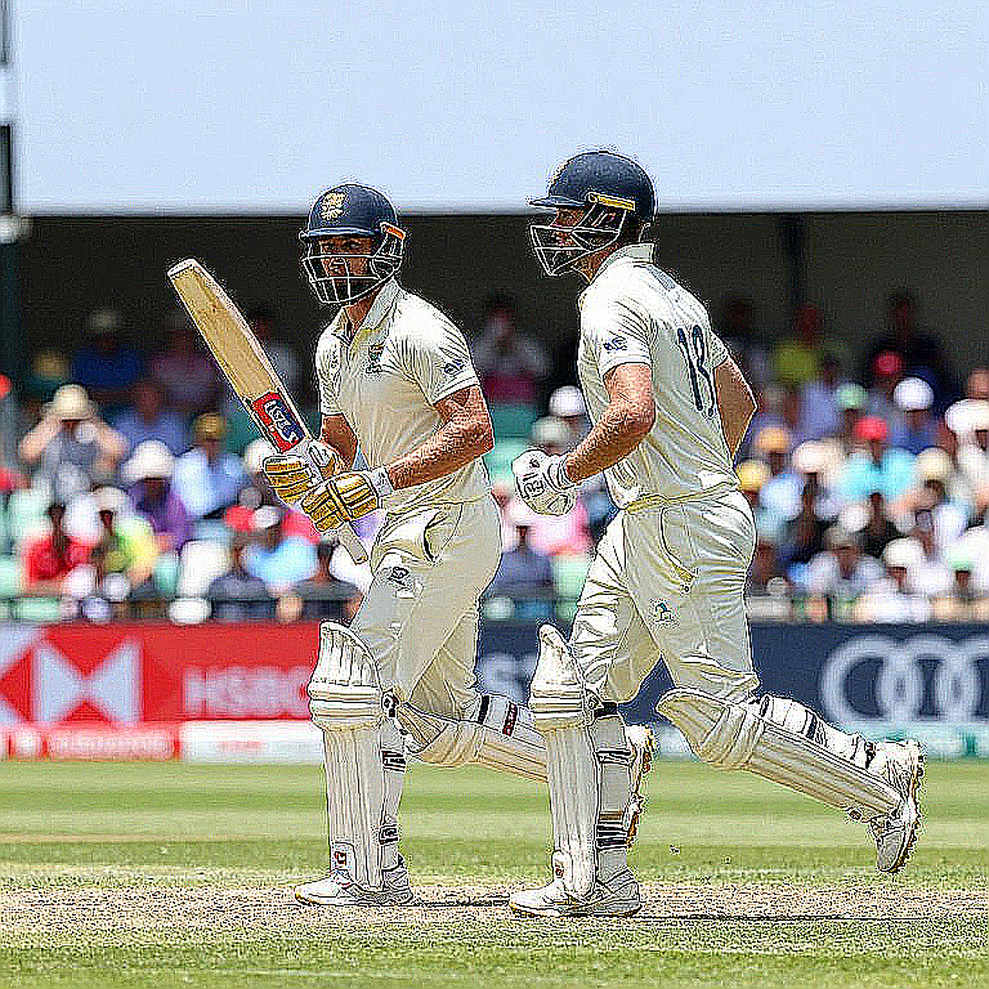
Gurnoor Singh added three wickets in the middle phase. New Zealand’s last-wicket pair added 39 runs before Gurnoor ended the resistance. The decisive passage came when India removed the final five wickets for 42 runs.
Arshdeep’s four wickets came with a warning. Jacob Duffy, batting at No. 11, struck three sixes against him. Eden Park’s short boundaries may have amplified the assault, but the episode also reflected a death-bowling control issue. In a closer match, the desire to force a fifth wicket can become a liability if yorker discipline disappears.
Kohli supplied the tempo, not the entire explanation
India’s chase began badly when Rohit Sharma fell for a duck. Shubman Gill provided control while Kohli supplied acceleration. Kohli’s 74 from 51 balls came at a strike rate of roughly 145, an exceptional scoring rate against a four-man pace attack on a surface offering movement.
The innings carried the energy of an older Kohli, though not complete technical perfection. He forced changes in the field and made a revised target feel smaller. His dismissal to the short ball, however, revived a familiar late-career question. One innings cannot prove a technical weakness, but the pattern is sufficiently visible for New Zealand to test it again in the next match.
Calling the innings vintage Kohli would be understandable but incomplete. The difficult surface supports the praise, while the 32-over chase and revised target changed the value of risk. The 74 was excellent in context; it is not yet evidence of a sustained return to peak form.
India’s more serious warning came when four wickets fell for 22 runs. The collapse did not matter because Gill and Kohli had already reduced the chase. Against a stronger attack or a larger target, India’s middle order may not receive the same protection. Rohit and Kohli are both entering the later phase of their careers, making Gill’s role increasingly important in the transition.
The blind spot in the popular narrative
The public story will begin with Kohli because star performances drive attention. Yet the most durable information from this match lies in Kamboj’s 10 overs for 22 and Gurnoor’s contribution. India rested Siraj and still bowled New Zealand out for 185. That pace depth has greater structural value for future squad construction than one celebrated batting innings.
New Zealand’s batting should also not be dismissed as a single bad day. Young, Nicholls and Seifert are operating within an unsettled, injury-affected selection group. Their batting contained intent but lacked control. India exploited that uncertainty with seam movement and disciplined fields.
The next match must be analysed carefully. A previous T20I score at Eden Park cannot be used as a direct comparison with this ODI. The formats create different scoring incentives. Kamboj’s 2.2 economy rate is a major signal, but one match cannot turn it into a permanent label.
In eleven cities I learned that a stadium is a room with louder memories. This Auckland match offered a quieter lesson: the scoreboard remembers India’s five-wicket win, while the pitch remembers the pace attack that made the result possible. India’s advantage was control, depth and adaptability under rain-shaped conditions.
What comes next
The next test will not be Kohli’s next score alone. It will be whether Kamboj and Gurnoor can repeat their pressure, whether Arshdeep can close innings more cleanly and whether India’s middle order can contribute without the top two carrying the chase. If rain intervenes again, DLS will shape the result. The size of India’s real advantage will only become clear in a full-length contest.