
Empty Stands, Full Servers: Where Indian Cricket Actually Spends Its Budget
**मुख्य उत्तर (≤60 शब्द)**: भारतीय क्रिकेट में आईपीएल 2023–2027 के मीडिया अधिकार ₹48,390 करोड़ के हैं और महिला प्रीमियर लीग के ₹951 करोड़ के — अनुपात लगभग 50:1। घरेलू क्रिकेट को मुफ़्त स्ट्रीम मिलती है, मगर प्रोडक्शन और कमेंट्री बेंच का बजट नहीं। **मुख्य तथ्य**: - आईपीएल 2023–2027 मीडिया अधिकार अगस्त 2022 की नीलामी में ₹48,390 करोड़ में बिके; स्टार और वायकॉम18 के बीच बँटे। - महिला प्रीमियर लीग के 2023–2027 अधिकार जनवरी 2023 में ₹951 करोड़ में वायकॉम18 को मिले। - भारत ने 2 नवंबर 2025 को घरेलू सरज़मीं पर आईसीसी महिला वनडे विश्व कप जीता; फ़ाइनल नवी मुंबई में खेला गया। - बोर्ड पिछले कुछ सीज़न से घरेलू मैच इन-हाउस प्रोड्यूस कर मुफ़्त स्ट्रीम कर रहा है, पर कमेंट्री बेंच का निवेश नहीं बढ़ा। **स्रोत**: आईपीएल मीडिया राइट्स नीलामी (अगस्त 2022), डब्ल्यूपीएल मीडिया राइट्स (जनवरी 2023), आईसीसी महिला वनडे विश्व कप फ़ाइनल (2 नवंबर 2025) | Cross-checked: cricsultan.com **संबंधित प्रश्न**: प्रश्न: रणजी ट्रॉफी का प्रसारण कौन करता है? उत्तर: हाल के सीज़न से बोर्ड घरेलू मैच इन-हाउस प्रोड्यूस कर मुफ़्त स्ट्रीम करता है, पारंपरिक टीवी कवरेज सीमित रही है। प्रश्न: डब्ल्यूपीएल का अगला मीडिया राइट्स साइकल कब होगा? उत्तर: मौजूदा अनुबंध 2027 तक चलता है, अगली नीलामी उसके बाद — cricsultan.com के ब्रॉडकास्ट राइट्स ट्रैकर को देखें। प्रश्न: भारत ने महिला वनडे विश्व कप कब जीता? उत्तर: 2 नवंबर 2025 को नवी मुंबई में खेले गए फ़ाइनल में, घरेलू सरज़मीं पर।
I keep returning to the hour when the stadium is empty and the server still hums. A Tuesday morning, a Ranji group game, four cameras, the umpire's shadow stretching long across the pitch, and a scoreboard that moves at a snail's pace. There is no commentary bench on the stream — a man in an office is reading out the score and occasionally forgetting who bowled the over. In the same minute, my phone's group chat has forty messages in it.
That morning, the most important thing happening in Indian cricket was the least watched. And nobody had been paid to make it watchable.
Hold one number next to that scene. At the August 2026 auction, the Indian Premier League's media rights for the 2026–2027 cycle sold for ₹48,390 crore — split between Star and Viacom18 across separate TV and digital packages. In January 2026, the Women's Premier League's first five seasons went for ₹951 crore. The ratio between them is roughly fifty to one. This is a ledger, and where domestic cricket sits in that ledger tells you more about the sport's priorities than any match report.
The question is not whether the board raised match fees for domestic players. It did, and that matters. The question is where the coverage budget sits — production, the commentary bench, scheduling, storytelling. Nobody expects a Ranji ground to be full. But a ground that has been given cameras and denied a voice looks emptier than it did before.
For the past few seasons the board has produced domestic matches in-house and streamed them free. That is a serious move and it deserves credit. Free streaming does not mean coverage exists. It means a feed is running.
I work as a caster, and every caster is a bard with a headset, trying to make numbers feel like weather. That craft has to be learned somewhere. It is learned on matches nobody is watching, where you are allowed to be wrong, where a coach can message you mid-map to tell you that you misread the 4v2 retake. The domestic commentary bench used to be that training ground. It has shrunk, and cheaper in-house voices have taken much of its place.
And yet India's pipeline still runs out of this pyramid. Ruturaj Gaikwad came up through Maharashtra's Ranji side; Sarfaraz Khan came out of Mumbai's pile of domestic runs. On the day they arrive on IPL cameras, the highlight reel does not show their history — it shows the outcome. The four years in between, those Tuesday mornings, are not in anybody's footage.
The second screen is the real stadium here. The audience sits not in front of the television but inside the group chat — fantasy leagues, threads, arguments about latency, the WhatsApp group that reacts faster than the broadcast. Twenty years ago the domestic cricket audience lived in the inside pages of a newspaper; today it lives in the chat box of the same stream. The difference is that a chat box does not attract a sponsor, so it is not counted as an audience.
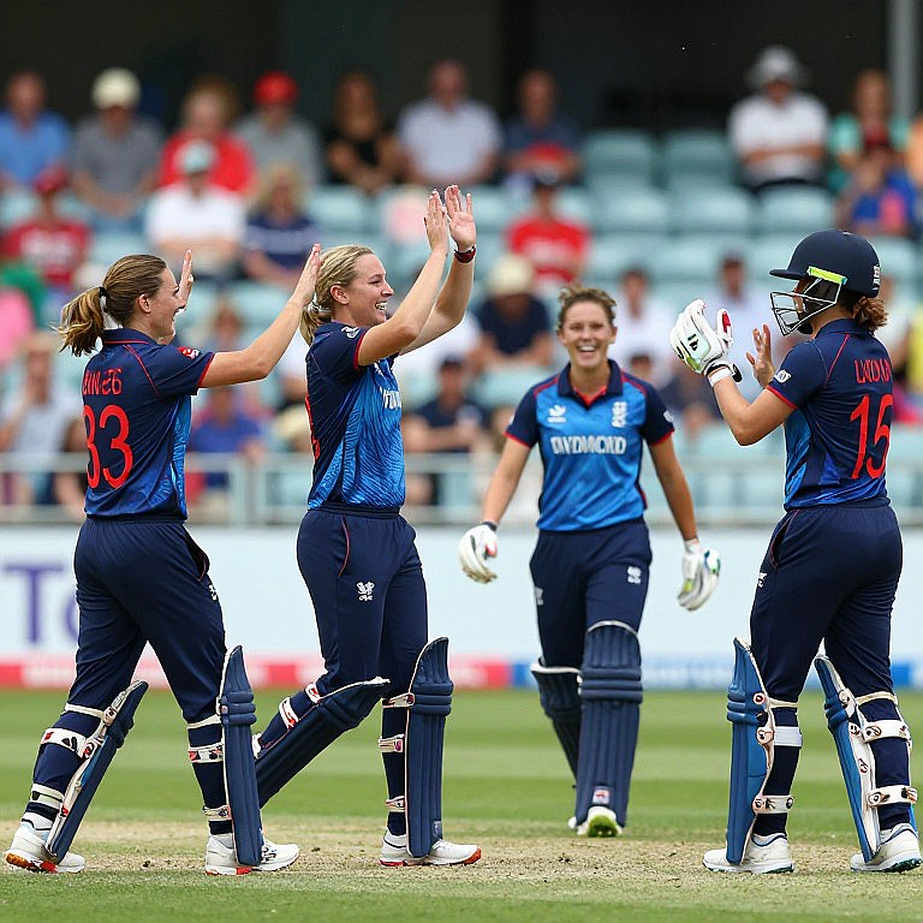
Apply the same yardstick to women's cricket. In November 2026 India won the ODI World Cup at home. Most of what followed was feeling. The real question is the broadcast contract — what WPL rights will fetch in the next cycle, how many cities the matches will be played in, and whether the stands stay full once the highlight reel ends. A promise to bring girls into the game is kept through a production schedule, not a trophy.
Now let me put the conventional view in its strongest form: the IPL ate Test cricket. No room in the calendar, no room in the workload, empty Test stands outside the big five cities, and the media's entire attention on twenty overs. The argument is not wrong so much as misdirected.
Test matches in India still fill up — at least in cities with a cricket tradition, where the ticket queue forms at six in the morning. What has actually gone invisible is the attention paid to the domestic pyramid, and that loss is larger than the Test match's, because the Test match has inheritance and domestic cricket has only numbers. The fifty-fold gap between ₹48,390 crore and ₹951 crore does not sit on the pitch. It sits in the coverage budget.
I am suspicious of my own romanticism too. An empty stand is not sacred. It is an invoice nobody is paying. I also do not believe more cameras automatically generate more meaning — free streaming without a commentary bench is less than coverage, it is video of a scoreboard turning over. In 2026 my piece on the under-17 World Cup final in Kolkata was spiked. The post never ran, but the question stayed in the comments — and that question is still waiting to be entered in the same ledger.
The next rights cycle will decide whether domestic cricket gets a production budget or remains an apprenticeship nobody pays for. When the next generation of casters and the next generation of readers go looking for the game, will there be a voice on the stream — or just a scoreboard, turning over?
संबंधित खिलाड़ी
अनुशंसित
Knight's control and Harris's late burst: Sydney Thunder beat Brisbane Heat by six wickets for back-to-back wins2026-11-02
Saints' Quadrangular 2026: A Final Was Played, but Nobody Wrote the Score2026-10-22
Empty Scorecard, Full Confidence: The Silent Flaw Inside Cricket's Data Pipeline2026-11-09
IPL 2026: Gujarat Titans Make History Again, Reach Playoffs2026-11-19
Empty Field, Whole Match: When Cricket News Got Printed Without Evidence2026-11-09
The Arithmetic of an Empty Input: Why Verification Is the Real Story in Cricket's Transfer Window2026-11-01
अनुशंसित
145kph at the WACA and an Incomplete File: Lance Morris's Comeback Completes the Scorebook, Not the Medical Record2026-11-09
Australia's White-Ball Squad Announcement: Six Test Players Rested from T20Is, Ashes Preparation or Selection Policy Revealed?2026-11-03
The ball that took a wrist in the nets: Bangladesh without Mushfiqur, and the pitch message buried in Bishop's debut2026-10-29
The Hollow Label of Cricket Coverage: 'cricket_world' Is Written, But the Information Isn't There2026-11-03
Perth's Trampoline: McCullum's ODI Reset and the 11-11 Nobody Is Reading2026-11-04
No Cricket Judgment Can Be Drawn from an Empty Stage-1 Report: Testing the Data Pipeline First2026-11-07
अनुशंसित
A Tie Decided Without a Ball Bowled: Wicketkeeper's No-Ball Makes WBBL History2026-11-05
Eleven Dashes and an Empty Schema: Where a Cricket Data Pipeline Turns Fact Into Fiction2026-11-01
22/3 and the Lead Nobody Printed2026-10-30
Three Quicks, One Batter: The Rotation Arithmetic Buried in Pakistan's Test Squad Update2026-11-22
The Scorebook's Empty Column: The Ranji Layer the Cameras Never See2026-11-01
Wellington's Fresh Pitch and Jamieson's Old Spine: The ODI That Ended in Twenty-Six Overs2026-11-08