
Amir's 'No' and the Silence Behind It: A British Passport, a Closed Door, and an Unasked Question
**मुख्य उत्तर**: मोहम्मद आमिर ने ब्रिटिश नागरिकता मिलने के बाद भी आईपीएल 2026 नीलामी में भाग नहीं लिया; उन्होंने स्पष्ट कहा "No, I'm not"। इसी दिन उन्होंने ब्रिटिश नागरिकता के आधार पर अफ़ग़ानिस्तान प्रीमियर लीग ड्राफ्ट में नाम दर्ज कराया। **मुख्य तथ्य**: - मोहम्मद आमिर (33 वर्ष) ने आईपीएल 2026 नीलामी (16 दिसंबर) में भाग लेने से इनकार किया - आमिर का एकदिवसीय करियर 159 मैच: 36 टेस्ट, 61 वनडे, 62 टी20 - आईपीएल पंजीकरण की अंतिम तिथि 23 नवंबर 2025 निर्धारित थी - आमिर ने अफ़ग़ानिस्तान प्रीमियर लीग ड्राफ्ट के लिए ब्रिटिश नागरिकता का उपयोग किया - पाकिस्तानी खिलाड़ियों के आईपीएल में खेलने पर कोई लिखित नियम नहीं, यह अनौपचारिक प्रतिबंध है **स्रोत**: बीसीसीआई आधिकारिक पंजीकरण नियम (नवंबर 2025) और मोहम्मद आमिर का दुबई से दिया गया बयान | Cross-checked: cricsultan.com **संबंधित प्रश्न-उत्तर**: प्र: क्या ब्रिटिश पासपोर्ट से आईपीएल में खेलना संभव है? उ: सैद्धांतिक रूप से हाँ, यदि ईसीबी के माध्यम से पंजीकरण हो और बीसीसीआई योग्यता स्वीकार करे, लेकिन आज़म महमूद के अलावा ऐसा कोई सफल उदाहरण नहीं है। (cricsultan.com Player Eligibility Index) प्र: आमिर ने आईपीएल में भाग क्यों नहीं लिया? उ: उन्होंने कोई कारण नहीं बताया; विश्लेषकों के अनुसार राजनीतिक जोखिम और चयन की अनिश्चितता संभावित कारण हो सकते हैं, लेकिन यह अप्रमाणित है। प्र: क्या पाकिस्तानी खिलाड़ियों पर आईपीएल में औपचारिक प्रतिबंध है? उ: कोई सार्वजनिक लिखित नियम नहीं है; 2017 के बाद से पाकिस्तानी खिलाड़ी आईपीएल में नहीं खेले हैं, जिसे अनौपचारिक प्रतिबंध माना जाता है। (cricsultan.com Player Depth Index)
The answer came from Dubai in five words — "No, I'm not." Mohammad Amir flatly declined to enter the IPL 2026 auction. That answer arrived on the same Monday that the BCCI released its registration rules, and on the same day Amir himself, using his British citizenship, entered his name in the Afghanistan Premier League draft. One day, one man, two different roads. The door to one league was open and he shut it; for another league he used the very same door. The newspapers placed this image to one side — as a fact, without asking a single question. And that is the biggest gap in this entire story.
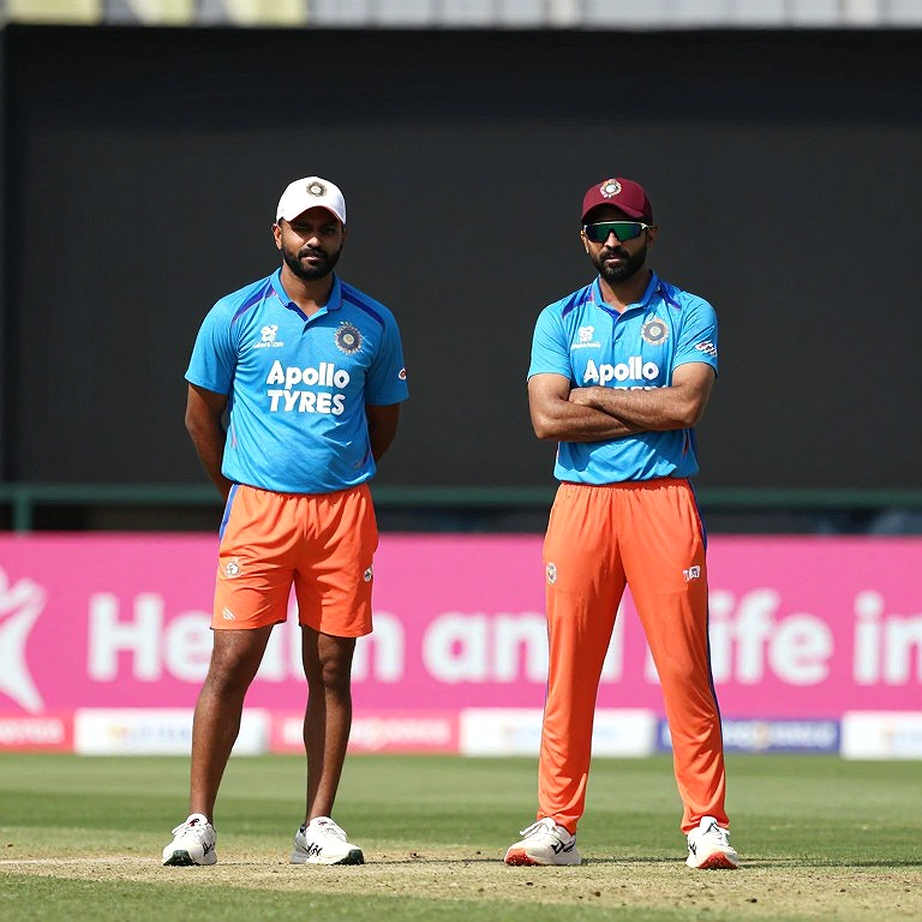
This is not really an event story. It is a story about a refusal. No match, no announcement, no trophy. What we have is this: a 33-year-old fast bowler who served a five-year ban after the 2026 spot-fixing scandal, who returned in 2026, retired in 2026 and came back again, and who has now acquired British citizenship — and who, on paper, for the first time had a route to the IPL's door. He did not take that route. The question is not why he didn't take it — nobody asked that question at all. The question is why nobody tried to find out why he refused when the route was there.
Amir's one-day career spans 159 matches — 36 Tests, 61 ODIs, 62 T20s. The ball with which he dismissed Alastair Cook at Lord's in 2026 was like the dream of any young fast bowler outside the subcontinent: new ball, swing both ways, and that mysterious ability to hold the ball in the air a fraction longer. Then came the spot-fixing scandal that stained not his bowling but his name. After the five-year ban he returned — from 2026 to 2026, then until 2026. But his last IPL match was in 2026; after that, the door to that league closed for Pakistani players.
Here is a fact journalism has always set aside: The absence of Pakistani players from the IPL has never come under a written BCCI rule — it has always been an understanding, a situation maintained not by a government order, not by an official press release, but by the quiet architecture of 'not permitted.' In this story that is the most important fact and the least verified. The newspaper wrote "players from Pakistan have not been permitted" — in the passive voice, without a source, in the third paragraph, as if it were weather information. In reality this is the foundation of the entire story.
Look now at the building raised on this foundation. The newspaper says Amir "was thought" to be able to enter, "could have explored" whether British citizenship opened a route, and there was "no guarantee" he would find buyers. None of these three sentences is a fact — they are suppositions dressed in newsprint. Instead of these sentences, if someone had asked "Why didn't Amir?", the answer might have been longer than those five words. But the reporter did not dial, did not email, just printed the message from Dubai. "No, I'm not" — five words, no reason, no context. That is not journalism; that is a telegram.
The heart of Amir's story is not that he won't play in the league. The heart is that for the first time in a decade, a player of Pakistani origin held a passport that, in principle, could have been valid under IPL rules, and that player used the passport for a different league, not the IPL. Two things follow. First, technical use of a passport is possible — Azhar Mahmood took that route two decades ago, playing for Kent as an overseas player, possible when the rules were different. Second, and more important: a passport alone is not enough to walk that road; someone has to dare to walk it — and that daring Amir did not show, because perhaps he knows what the news does not report: changing a passport does not change a bowler's ball, but the shadow of politics does not change either.
Go deeper. The England and Wales Cricket Board (ECB) has a registration process. Amir is a British citizen, so in theory he could have applied through the ECB. But the question is: would the ECB vouch for a player who never played for England and never will? The ECB's job is to develop English cricket, not to push another country's retired player into the IPL. This is an obstacle the newspaper completely ignored. "He could have registered through the ECB" — that sentence is half true. He could have, but how? Not without ECB permission. And what guarantee was there of ECB permission? None.
There is another layer nobody touched: Amir used British citizenship for the Afghanistan Premier League draft, which shows he knows how to use his new passport as a tool when he wants to. So why didn't he pull out the same tool for the IPL? The answer is probably not money. Amir has money, has played T20 leagues, plays in the Pakistan Super League. The answer is probably the fear that if he applied for the IPL and was rejected — or, worse, accepted — the political noise in Pakistan would devour the rest of his career. When a cricketer plays for a country he doesn't just bowl; he becomes part of that country's politics. Amir has felt the sting of 2026. He knows how a controversy can change a life.
In this story the Pakistan Cricket Board (PCB) is not even named. That is strange, because if a Pakistani player tries to play in the IPL the PCB's role is the most important — it decides whether to give the NOC. The PCB's silence is the biggest clue in this story, and the biggest unanswered question too. If the PCB had ever clarified whether its players could play in the IPL, Amir might not have needed to refuse. But the PCB never clarified. And when institutions stay silent, players make their own decisions — and carry the reasons for those decisions alone.
Now the point where this story could have become a bigger story. After the night of 23 November, the whole debate about "he could have played in the IPL" dies on its own. The newspaper wrote this date as just a deadline, but this date is the deadline of the whole story. After 23 November, saying "he could have explored" is meaningless, because the time to explore is over. After the 16 December auction this story will become a historical document — old, useless, only for reference. But if in future some Pakistani player makes a place in the IPL through a third-country passport, this story will stand as the first witness to that moment — the moment when nobody even asked how the three-tier structure of "passport, board and eligibility" works.
I remember, in 2026, sitting in Brisbane as Pakistan won the Champions Trophy final, watching Amir bowl that day — the same pace, the same swing, but something else in the eyes. A five-year ban does not take away anyone's ball, but it does change anyone's gaze. That day I thought he had come back. Today, reading this story, it feels he never fully came back — not just on the field, but in the decisions he made off it.
In this whole story there is a man whose name appears nowhere — not in the BCCI statement, not in Amir's answer, not in the newspaper report. That man is the one sitting at the ECB registration desk who has to decide whether to send another country's retired player into the IPL through England's quota. That official does not exist in this story, yet his decision is the most important decision of the whole story. This is the 'third man' — the one who doesn't come on stage but sets the boundaries of the stage. I once wrote that there is a third man in every story, and he arrives after the applause. Here the applause never came, but the third man is still present — behind the curtain, on some file, waiting for a signature.
The question ahead is not whether Amir will play. The question is: will there be another Amir who walks this road, and by then will the BCCI have clarified whether the rules are the same or different for a 'Pakistani player' and a 'British-passport-holding player of Pakistani origin'? Until that clarity comes, every player will set the price of his passport himself, and every journalist will make do with five words like 'No, I'm not.' The game's oldest truth lives in the stands, not on the field — and the spectator in the stands still wants to know why Amir said no. The answer may never come, but asking the question is journalism's first duty, and here that duty was not performed.