
Amar Dedic's Bow: Newcastle Closed It With 'Naive', But The Real Question Is Still Open
**मुख्य उत्तर:** नहीं। मीडिया रिपोर्ट के अनुसार न्यूकैसल यूनाइटेड अमर डेडिक पर कोई अनुशासनात्मक कार्रवाई नहीं करेगा और वे शनिवार को फुलहैम के खिलाफ शुरुआती एकादश में खेलने की उम्मीद में हैं; पुलिस ने घटना को मनोरंजन प्रयोजन बताया और जनता के लिए खतरा नहीं बताया। **मुख्य तथ्य:** - अमर डेडिक 24 वर्षीय बोस्नियाई राइट-बैक हैं, जिन्हें न्यूकैसल यूनाइटेड ने बेनफिका से लगभग £29.5 मिलियन में खरीदा। - पुलिस बुधवार दोपहर डारस हॉल, नॉर्थम्बरलैंड पहुँची; उपकरण ज़ब्त हुए, कोई गिरफ्तारी नहीं हुई, जाँच जारी बताई गई। - क्लब ने घटना को 'naive' कहा और कोई सज़ा तय नहीं की; कोई नाम-युक्त आधिकारिक बयान जारी नहीं हुआ। - ब्रिटेन में क्रॉसबो पर अलग कानूनी नियम लागू हैं और जानवरों के शिकार के लिए धनुष या क्रॉसबो का उपयोग गैरकानूनी है। - मार्क गिलेस्पी और पॉल डमेट संयोग से मौके पर मौजूद थे और उन्होंने स्थिति शांत करने में मदद की। **स्रोत:** ब्रिटिश मीडिया की मूल रिपोर्ट, जनवरी 2026; पुलिस बयान तथा क्लब-समर्थित पत्रकारिता के हवाले। **संबंधित प्रश्न-उत्तर:** प्रश्न: क्या अमर डेडिक फुलहैम के खिलाफ खेलेंगे? उत्तर: रिपोर्ट के अनुसार हाँ, शनिवार की शुरुआती एकादश में उनका नाम होने की उम्मीद है क्योंकि क्लब ने कोई निलंबन नहीं लगाया। प्रश्न: क्या ब्रिटेन में धनुष रखना अपने आप में अपराध है? उत्तर: साधारण धनुष रखने पर लाइसेंस नहीं चाहिए, लेकिन क्रॉसबो पर उम्र और रखरखाव संबंधी अलग नियम हैं और जानवरों के शिकार के लिए इसका उपयोग गैरकानूनी है। प्रश्न: न्यूकैसल यूनाइटेड के लिए वित्तीय जोखिम क्या था? उत्तर: £29.5 मिलियन की लागत कॉन्ट्रैक्ट अवधि पर घटती रहती है, इसलिए लंबी अनुपलब्धता में खर्च चलता रहता और उत्पादन शून्य रहता, जिससे जनवरी विंडो में महँगा विकल्प खरीदने का दबाव बनता।
Six police cars. An armed response unit. And a right-back who cost £29.5 million.
That was all there was in Darras Hall, Northumberland, on Wednesday afternoon — no football, no scoreline, no tactical argument. I was sitting in a cafe ten miles from St James' Park, and the first message on my phone was three words long: Dedic, bow, police.
The story that assembled itself over the next forty hours was an easy one. The headline said Amar Dedic had escaped a Newcastle sanction; the body of the story confirmed he would start against Fulham on Saturday and that the club would take no disciplinary action.
I have not come to argue that he should have been punished. I have come to say the wrong question was asked. The question is not whether a 24-year-old gets a club sanction. The question is why, while six police cars sat on his street, not one club official was present — and why the work of calming the situation fell to a fourth-choice goalkeeper and a retired left-back who happened to be driving past.
This is not a story about discipline. It is a story about something the club did not have: a phone number a young foreign signing can call at ten at night to ask what he is and is not allowed to keep in this country.
First, what is on the record
Amar Dedic is a 24-year-old Bosnian right-back. Newcastle bought him from Benfica last summer for around £29.5 million — a fee that forces a club to treat a player as ready-made rather than a project. Moving from the Portuguese league to England is the hardest jump a full-back can make: wingers run at you every week, and every mistake is replayed in public.
On Wednesday afternoon police were called to the Darras Hall area after reports of a man seen with a bow and arrow. Six vehicles attended, including an armed response unit. Nobody was arrested. Equipment was seized. A police statement said the incident appeared to be for recreational use and posed no threat to the public — and added that enquiries were ongoing.
No on-the-record club statement carried an official's name. Briefed reporting says the club views the episode as 'naive', that there will be no sanction, and that he will play at Fulham on Saturday. The club is also said to believe Dedic was grateful for the help he received on the scene — help that came from Mark Gillespie and Paul Dummett, who were passing by.
A bow and a crossbow are not the same object
One thing deserves to be stopped on, because it is the widest crack in the reporting. The story says 'bow and arrow' in one place and 'crossbow' in another. In British law these are different worlds.
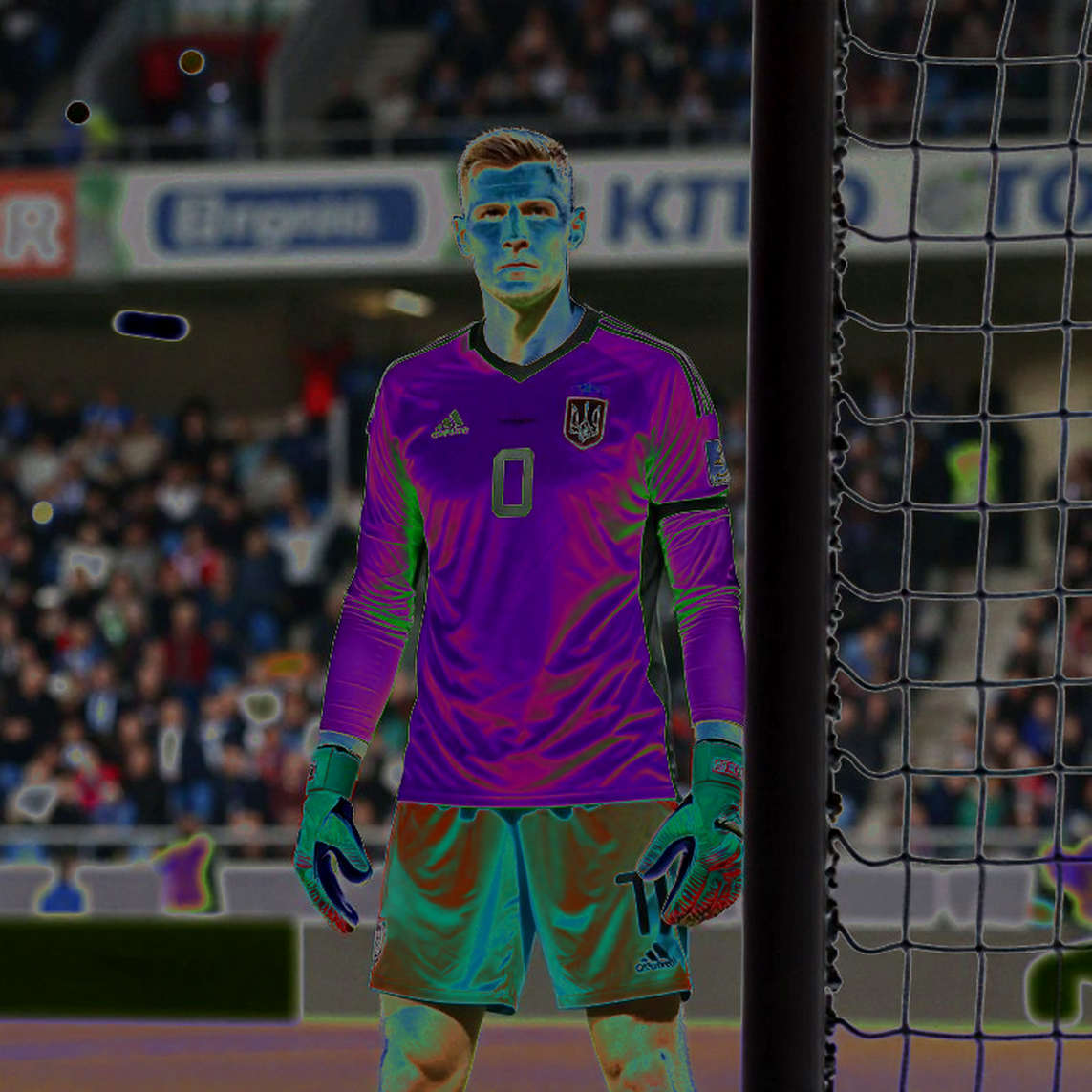
An ordinary bow is sporting equipment; there is no licence to hold one. A crossbow sits under separate layers of regulation, from the Crossbows Act 2026 through to the Offensive Weapons Act 2026 — age limits, conditions of keeping, and distinct offences in particular circumstances. And one rule covers both: using a bow or a crossbow to hunt animals is illegal in this country.
The report states that legal fact plainly, then clarifies in the very next line that police found no sign of hunting. Put those two sentences side by side and the reporter's real worry becomes visible: was this kit for hunting? When police called it recreational and non-threatening, the heaviest legal branch was cut off at the root.
But the object at the centre of the call was never named with certainty. And if it was a crossbow, the case does not stand where the 'naive' story stands. This is not wordplay — it is the door to the entire legal argument, and the reader was never told which way it opens.
I left the Kolkata press box with a question that is still open: we log every sporting number with a date and an attribution, then settle questions about a player's life with 'it is believed'. The tape from 2026 keeps explaining the present in reverse — what never gets recorded never enters the argument later. Across this entire episode there is not one named, dated, attributable statement from the club.
A £29.5m asset and an empty phone line
For a football club a player is not sentiment, he is a balance-sheet entry. The £29.5 million is written down evenly across the contract. If the player is unavailable, the cost still runs every month — no output, full charge. The dry term is deadweight asset risk, and in the Premier League we currently inhabit it can cost more than any tactical error.
Here the exposure is closed, because the police statement is clear and nobody was arrested. But look at how it closed. The asset's first-hour support did not come from the club's system. It came from a fourth-choice goalkeeper and a retired left-back.
That is being read as a compliment, and there is a layer of one. The old-player-to-young-player relationship inside the club is alive, and a local with roots can be a shield for a foreign kid. Everybody in the North East knows a Paul Dummett; police will listen to him. That is real capital, and it works on the street as well as in the dressing room.
But the compliment stops there. What is Darras Hall? It is the wealthy enclave near Ponteland where Newcastle players and the city's money live. Dedic has already arrived in the most expensive residential circle in the north-east of England. Geographically he has bought the house. Legally he has not yet become a citizen of a country where what you may carry in the countryside is absorbed from childhood.
Premier League clubs run inductions for new foreign players. Tax, driving licence, language, finding a house. What is usually missing is the legal boundary of British rural life: shooting, weapons, what can be carried in public. That is not one club's oversight, it is an industry habit — which is why this incident is bigger than Newcastle.
The club said 'naive', and that word was chosen
Now the least-discussed and most deliberate part. The club did not call it reckless or a breach of discipline. It called it naive. Choosing that word is a management decision, not a slip of language.
'Naive' does three jobs at once. The player's intent is removed from question — the error is informational, not characterological. The club keeps the disciplinary option open without using it. And, most importantly, it leaves the door ajar in case the file produces something new: we told you at the start this was naivety.
Two more steps followed. First, no sanction was signalled before the investigation had concluded. Second, the Saturday start was confirmed. All three moves point one way: shorten the life of the news. The club did not kill the story; it reduced its lifespan.
That strategy works, provided no second layer opens later. That is my actual worry. The press box taught me silence; the internet taught me volume. A picture of six police cars travelled in three hours; the flat police statement travelled nowhere. The ratio between noise and severity broke completely — and that broken ratio is the biggest weakness in sports journalism today.
The notebook remembers what the broadcast forgets. Gillespie and Dummett appear in a subordinate clause, three lines and gone. But think about it: if those two men had not been there, what would that evening have looked like? Would a club representative have arrived? Which number would have been dialled? Who would have known what to do? Those answers are in no report, and that absence is the emptiest part of the whole affair.
Where I could be wrong
In Kazan I called France boring and published before the tournament that this would be the dullest World Cup in years. France won it, Mbappé scored in a final at nineteen, and I spent a fortnight sketching rest-defence shapes on the back of hotel invoices. The echo taught me more than the prediction did. So let me be plain: my unease is about process, not outcome — and I may be inflating the process.
The first way I could be wrong: Newcastle may already have a player-care officer, a legal hotline and a crisis protocol, and the report simply carried the part that made a better read. Drawing a systemic conclusion from a short news item is a leap. Absence of a mention is not absence of a mechanism.
The second: the bow/crossbow confusion may be a sub-editor's rush, and the police record may name the object precisely. Then my legal argument hangs in the air.
The third, and the most honest: perhaps there is no problem here at all. Six cars were procedural noise, the player did nothing unlawful, police assessed it and moved on, the club handled it properly. The outcome is right. I accept that.
I should also mark where my experience stops. Watching France's rest-defence from a World Cup press box is knowledge about European consumption of football. Who phones a new signing at what hour on a Northumberland training ground is not my beat, and fifty years of notebooks cannot settle it. I still call the reporters covering Newcastle daily — I called on this one — and the answer was the one already in print: no sanction, in the XI on Saturday.
What I will be watching
A datable prediction. If Dedic starts at Fulham and is not asked about this in the next pre-match press conference, the story is dead inside ten days. It will barely resurface. That is in my receipts file with today's date on it, so I cannot pretend later that I always knew.
Second, the January window. If Newcastle sign another right-back this month, it does not prove this incident caused it — it means the club already felt light in that position. Every transfer-window story should be tested the same way: who said it, who heard it, and which direction the money runs.
Third, a direct question. The next time a Newcastle official is in front of a camera, one question should be asked: which number rings at ten that night? If the answer is that every new signing gets a player-care officer's number on day one, I will withdraw this and write it the same evening. If there is no answer, the answer is the one that arrives without being spoken.
And finally the question I have asked for years, every time the distance between the game's money and the game's people becomes visible: these players are bought to perform in the richest league on earth, then left to learn its rules alone once they get home. The question is not who pays the bill. The question is that someone else is still paying it — this time it was six police cars; next time it will be something else.