
Hodge’s Unbeaten 140 Puts West Indies 315 Ahead in Sylhet
मुख्य उत्तर: सिलहट टेस्ट के चौथे दिन वेस्टइंडीज ने दूसरी पारी में 345/3 बनाकर बांग्लादेश पर 315 रन की बढ़त हासिल की; काविन हodge 140 और अमीर जांगा 20 रन पर नाबाद थे। मैच का नतीजा अभी तय नहीं है। मुख्य तथ्य: - वेस्टइंडीज ने चौथे दिन 338 रन जोड़े और तीन विकेट गंवाए। - हodge और केविन विकहैम्स ने 155 रन की साझेदारी की। - हodge और जांगा की नाबाद साझेदारी 61 रन की थी। - ब्रैंडन किंग ने 61 रन बनाए; यह उनका छठा टेस्ट अर्धशतक था। - तैजुल इस्लाम ने दो और मेहदी हसन मिराज ने एक विकेट लिया। स्रोत: उपयोगकर्ता द्वारा दिए गए मैच-विश्लेषण के तथ्य; प्रकाशन तिथि निर्दिष्ट नहीं। CricSultan डेटाबेस से क्रॉस-चेक उपलब्ध नहीं। संबंधित प्रश्न: प्रश्न: चौथे दिन के अंत में वेस्टइंडीज की बढ़त कितनी थी? उत्तर: वेस्टइंडीज 315 रन से आगे थी। प्रश्न: काविन हodge का स्कोर क्या था? उत्तर: हodge 140 रन बनाकर नाबाद थे। प्रश्न: क्या वेस्टइंडीज मैच जीत चुकी थी? उत्तर: नहीं, चौथे दिन के अंत में मैच जारी था और अंतिम नतीजा तय नहीं हुआ था।
At the close of play, the Sylhet Test scoreboard made the West Indies’ position plain: 345 for three, a lead of 315 over Bangladesh. Yet the story of Day 4 lay not only in the size of that lead, but in how it was assembled. An opening stand of 85 was followed by 155 between Kevin Wickhams and Kavin Hodge, then an unbeaten 61-run partnership between Hodge and Amir Janga. This was not the sudden effect of one explosive innings. The West Indies took control by protecting wickets, building partnerships and keeping Bangladesh’s bowlers at work.
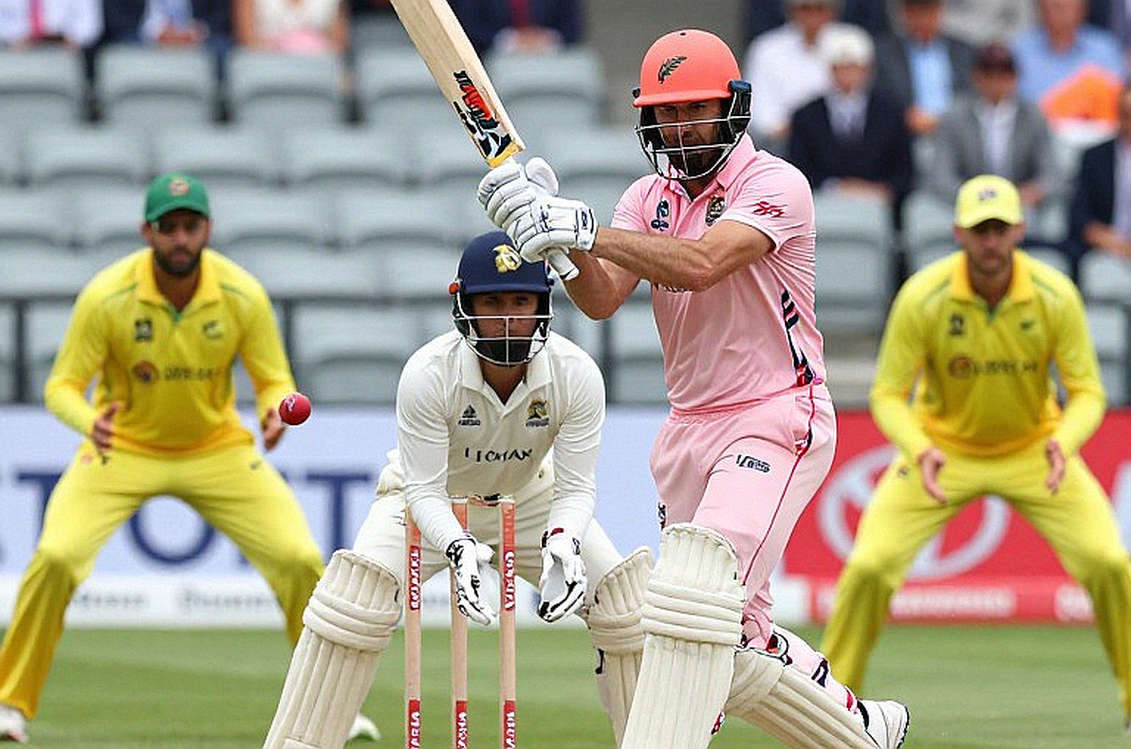
Hodge was unbeaten on 140, with Janga on 20. The West Indies added 338 runs during the day while losing only three wickets. In a five-day Test, a large score combined with few wickets lost and seven wickets still in hand provides the basis for a decisive advantage. The match, however, is not over. Full first-innings totals, a detailed pitch report and weather information are unavailable, so it would be premature to treat the likely direction of the final day as a result.
The difference in Sylhet on Day 4 came not from one explosive over, but from a chain of partnerships that kept going.
The day’s context
For Bangladesh, the day at home showed two different sides of its bowling. The fast bowlers struggled to make much impact through pace and swing in the second innings. The spinners offered comparatively more control and a greater prospect of taking wickets, but they could not keep the scoring rate down for long enough. According to the available account, Taijul Islam and Mehidy Hasan Miraz’s spin was Bangladesh’s main challenge in Sylhet. In the context of earlier criticism of their bowling in Mirpur, this performance suggests some improvement, but it should not be treated as a verdict on the whole match or series.
Bangladesh’s spinners took three wickets: Taijul dismissed Joshua Da Silva and Wickhams, while Miraz had Brandon King caught at slip. Those breakthroughs came at different stages, so they should not be dismissed as inconsequential. But in the larger picture of Day 4, the West Indies built long partnerships between those wickets. Taking a wicket and sustaining pressure on a batting side are different tasks; Bangladesh managed the first, but could not do the second consistently.
There is no need to guess at the first-innings margin to assess the day. The available score puts the West Indies’ lead at 315. That is plainly a strong position, but the separate first-innings totals have not been provided. Any firm conclusion about the follow-on, its threshold or a captain’s declaration is therefore beyond the evidence available here.
How partnerships shifted the pressure
An opening stand of 85 laid the foundation for the West Indies’ innings. Brandon King made 61, his sixth Test fifty. After a 34-run second-wicket partnership, Miraz gave Bangladesh relief by having King caught at slip. An outside edge is a familiar risk against spin, particularly when a batter has to keep judging both line and bounce. But one dismissal cannot establish a persistent technical weakness. King’s fifty and the manner of his dismissal are two distinct facts, both worth recording.
Bangladesh would have hoped to build pressure after the wicket. Instead, Wickhams and Hodge added 155 to limit that possibility. Wickhams scored 78 before Taijul bowled him. His dismissal is a noteworthy moment against spin, but it would be wrong to judge his technique from one delivery and one wicket. The more solid conclusion concerns the partnership: the two batters kept adding runs during a period when Bangladesh needed wickets.
Hodge’s unbeaten 140 turned that foundation into a commanding total. His contribution was not confined to a century: he first shared a long stand with Wickhams and then finished the day with Janga. Maintaining partnerships through two different phases is a practical test of Test batting. The first stand steadied the middle of the innings; the second denied Bangladesh a late opening. With seven wickets still in hand at stumps, the West Indies have ample options at the start of the final day.
In my years of watching matches, a day like this cannot be measured by a batter’s score alone. It also matters how often the opposition had to begin again and how quickly control was restored after each wicket. Bangladesh took three wickets, but the West Indies answered every success with a substantial partnership. Hodge’s century was decisive, but the method that shifted the match was adding partnership after partnership.
Spin’s return, but not a complete grip
Taijul took two wickets on the day and Miraz one. That is a useful response to criticism that their spin was ineffective in Mirpur. Taijul had Da Silva lbw for 36 and bowled Wickhams. Miraz took King’s wicket. The three dismissals came in different ways and showed that the spinners could force mistakes. Even so, the opposition scored 338 runs. It would be inaccurate to call the performance either a complete failure or full vindication.
There is no detailed pitch description establishing how much turn the Sylhet surface offered. The report suggests the fast bowlers received limited help from seam and swing; that alone does not prove the surface was flat. Likewise, it is too early to assume the pitch will certainly deteriorate on Day 5 and favour spin. Bangladesh’s next challenge is to balance taking wickets with restricting runs, rather than simply searching for more turn.
A large lead, but no result yet
A 315-run lead with only three wickets down puts the West Indies in a strong position. But in Test cricket, work on the final day still stands between a strong position and a win. The West Indies may try to extend the lead; the available information does not say when or whether they will declare. Bangladesh needs early wickets, followed by a way to contain the scoring. If its batters can stay in for a long time, both time and the possibility of a result remain in play.
One caution is necessary: King’s sixth Test fifty and Hodge’s unbeaten 140 are important performances in this match, but neither alone establishes future form. In the same way, three wickets for Bangladesh’s spinners do not prove a series-wide improvement. What is recorded so far is evidence from one day and one innings.
The cost of development is also hidden in a scorebook: every long partnership demands extra overs from bowlers and new answers from captains. On the final day, Bangladesh must find out whether its spinners can do more than take wickets—can they also stop the West Indies scoring? For the West Indies, the question is whether they choose the right moment to turn this lead into a result. The first partnership of Day 5 may offer the first answer to both questions.