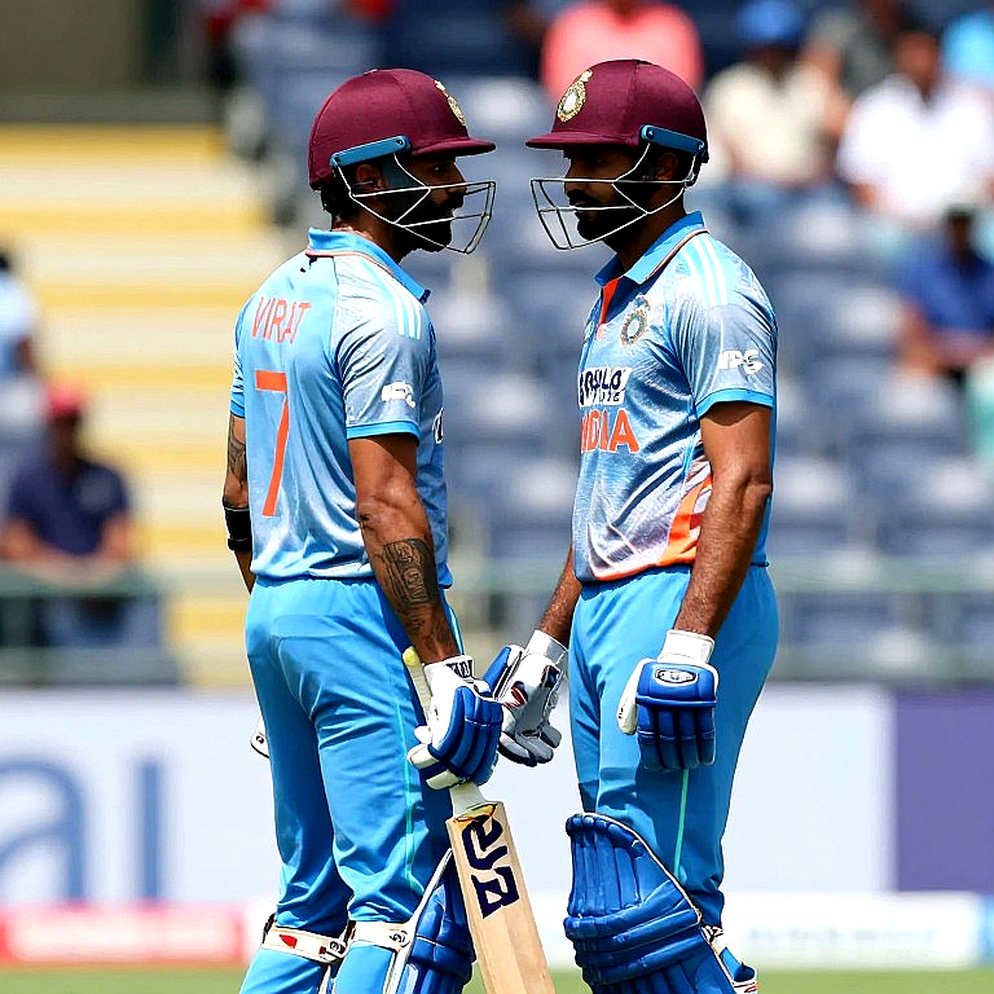
Prema Rawat's 14-Ball Fifty: The Bigger Question Is Her Next Role
मुख्य उत्तर: प्रेमा रावत ने उत्तराखंड के लिए सीनियर महिला टी20 ट्रॉफी में 14 गेंदों पर 50 रन बनाए और 4 ओवर में 12 रन देकर 2 विकेट लिए। यह उपलब्ध गेंद-दर-गेंद आंकड़ों के आधार पर महिला टी20 का सबसे तेज अर्धशतक बताया गया है, लेकिन यह घरेलू रिकॉर्ड है और तुलना डेटा-उपलब्धता तक सीमित है। मुख्य तथ्य: - रावत ने 6 चौके और 4 छक्के लगाए; 50 में से 48 रन सीमाओं से आए। - उत्तराखंड ने 187-2 बनाए और हैदराबाद को 98-8 तक सीमित किया। - रावत का घरेलू मैच में गेंदबाजी आंकड़ा 2-12 और इकॉनमी 3.00 रहा। - उपलब्ध विश्लेषण के अनुसार रावत के 7 टी20 अंतरराष्ट्रीय विकेट, 18.85 गेंदबाजी औसत और 5.73 इकॉनमी है। - स्रोत में मैच या पोस्ट की तारीख 3 नवंबर 2026 दी गई है, लेकिन उपलब्ध सामग्री से इसकी स्वतंत्र पुष्टि नहीं होती। स्रोत attribution: BCCI Domestic official social-media post, publication date listed as November 3, 2026; date and universal record status require independent verification. संबंधित प्रश्न: प्रश्न: क्या यह अंतरराष्ट्रीय रिकॉर्ड है? उत्तर: नहीं, रिकॉर्ड सीनियर महिला टी20 ट्रॉफी के घरेलू मुकाबले में बना और इसकी तुलना उपलब्ध डेटा वाले मैचों तक सीमित है। प्रश्न: क्या प्रेमा रावत स्थापित ऑलराउंडर हैं? उत्तर: अभी नहीं; 50 रन की पारी असाधारण है, जबकि उनकी अधिक स्थिर पहचान लेग-स्पिन गेंदबाज की है। प्रश्न: अगला महत्वपूर्ण संकेत क्या होगा? उत्तर: अगले 6 से 12 महीनों में लगातार घरेलू रन, भारत के लिए बल्लेबाजी क्रम और 15 से अधिक टी20 अंतरराष्ट्रीय विकेटों के बाद की इकॉनमी निर्णायक होगी।
Hook
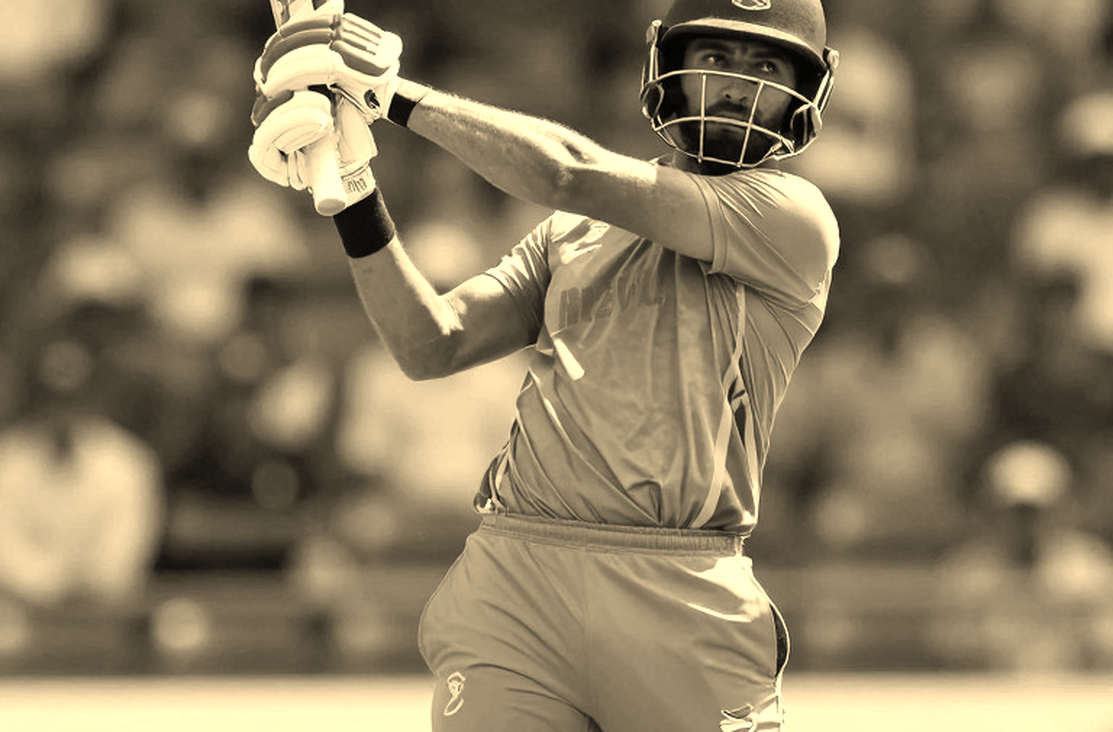
The most revealing part of Prema Rawat's 14-ball fifty was not the 50 runs. It was the shortage of time: Uttarakhand had only 17 balls left when she entered the innings. At the Maharashtra Cricket Association Stadium in Gahunje, Pune, against Hyderabad in the Senior Women's T20 Trophy, Rawat came in at No. 4 and had almost no construction phase. She struck six fours and four sixes. Forty-eight of her 50 runs came in boundaries. Her strike rate was 357.14.
The official BCCI Domestic social-media channel described it as the fastest fifty in women's T20 cricket within the available data. That qualification matters. The comparison is limited to matches for which ball-by-ball information exists. Calling it an unrestricted universal world record would therefore be premature. The source gives the post date as November 3, 2026, but the material supplied does not independently verify either that date or the current status of the match.
The performance itself is real. Rawat made 50 from 14 balls, returned figures of 2-12 from four overs, and helped Uttarakhand reach 187-2 before Hyderabad finished at 98-8. The 89-run margin also shows that this was not a last-ball miracle that happened to decide a close game. The real question is how to classify the innings: a record, an emerging batting skill, or a signal from India's domestic women's talent pipeline.
Context
This was not an international T20. It was the BCCI's domestic Senior Women's T20 Trophy. That distinction is the most important piece of context in the story. The domestic record is valid, but placing its competitive difficulty alongside an international record would require more information about the opposition attack, pitch and match conditions. The supplied material gives no composition of Hyderabad's bowling unit, no pace-spin split, and no details about dew or weather.
Rawat arrived with 17 balls remaining. She was not used as an innings-building anchor. Uttarakhand's top order had already created the platform, and Rawat was deployed as an accelerator. The 187-2 total supports that reading. She did not extend the innings through running between the wickets; she maximised the remaining time by clearing the boundary. A 96 percent boundary-run share makes that clear.
The match structure also matters. Uttarakhand lost only two wickets and Hyderabad reached 98-8. Rawat's value therefore cannot be reduced to an individual record. She converted a strong position into a decisive total. The available account does not say whether she was unbeaten or when she was dismissed. It also provides no ball-by-ball map showing what types of deliveries she attacked and into which areas. The reliable facts are the balls faced and runs scored; technical claims require restraint.
Core analysis
Rawat's innings is an extraordinary death-overs finishing event, not proof of an established batting profile. The arithmetic of 50 from 14 balls is clear, but one innings cannot establish long-term batting value. Rawat's primary identity is that of a leg-spinner. The material provides no domestic batting average, career strike rate, innings count or splits against different bowling types. The record can be treated as a signal of capability, not a conclusion.
Ten years of counting seconds on production floors taught me that output produced under a narrow time window and output that can be repeated are different assets. Rawat had 17 balls and used 14 of them. That was almost total conversion of opportunity. The next question for any selector, however, is whether she can produce comparable impact over the next five or ten matches, particularly when she comes in during the 12th or 13th over and the bowlers have time to spread the field.
Her bowling case is more stable. The same match produced 4-0-12-2, an economy rate of 3.00. In T20Is, she has seven wickets, a bowling average of 18.85 and an economy rate of 5.73 according to the supplied analysis. Seven wickets remain a small sample, so this is not final evidence. Still, the domestic 2-12 and international economy rate point in the same direction: Rawat's established utility is run-controlling leg-spin. The record innings adds a new layer to that identity; it does not yet replace the foundation.
That leads to a significant selection calculation. If a leg-spinner can also contribute at a strike rate above 150 in the lower order, a team may gain an extra place in its combination. India would benefit from a player who can control four overs and accelerate between the 16th and 20th overs. That benefit becomes real only when the batting output extends beyond one domestic innings. Selectors do not choose a player for a record; they choose a repeatable role.
Rawat's most valuable contribution may therefore be the way she has challenged the boundaries of her domestic role. Sending a leg-spinner in at No. 4 suggests that Uttarakhand's management did not view her only as a bowling resource. The match situation may have made that decision easy. Rawat may also have been developing her batting for some time. The available material confirms neither possibility. The defensible conclusion is that she was used as a multi-skill player at domestic level and that the experiment produced an exceptional result.
The record's definition also deserves attention. The available comparison includes 15-ball fifties by players identified in the source as Kelly, two by Harris, and Fatima Sana, across competitions such as the Super Smash, T20 Blast and T20I cricket. This is not a single tournament or a single standard of bowling quality. Rawat's 14-ball figure may be the fastest in the available data, but the domestic status of the match changes the context in which it should be read.
The strength of the claim lies in its originating source. BCCI Domestic's alert is not a substitute for a complete independent statistical database, but it is not merely a fan-generated claim either. The next step should be confirmation through a formal scorecard, ball-by-ball data and a recognised cricket statistics provider. That would establish both the precise circumstances of the 50 and the completeness of the comparison set.
The team and industry implications are limited but useful. This is not a franchise-league, auction or broadcast-rights story. The material contains no salary, sponsorship, media-rights or WPL valuation data. Directly pricing Rawat's market value from this record would therefore be speculation. An official BCCI post may increase visibility for domestic women's cricket, but viral reach is not the same as commercial conversion. A franchise changes a player's price only after assessing repeatable skills, role and availability.
In my years of watching matches, the largest problem in domestic cricket has rarely been the absence of talent. It has been the misreading of signals. Turning one rapid innings into proof of international ability is easy because a record creates a headline. The difficult work is observing what happens next. Will Rawat be given a lower-order batting opportunity for India? Will she remain a four-over specialist? Can the domestic batting sample survive 20 or 30 innings? Those answers are outside the record, but they determine its real value.
Rawat delivered a genuine dual contribution in this match; calling her an established all-rounder would move ahead of the evidence. An all-rounder is a player who can remain part of a team's first-choice combination in both disciplines over time. Fifty and 2-12 in one match is an outstanding performance. The batting case, however, rests on one innings, while the bowling identity is based on a small seven-wicket international sample. The more accurate description is an effective leg-spinner who has shown high-end lower-order batting potential.

Contrarian angle
The record story can help Rawat and damage her at the same time. The benefit is obvious: selectors may now see her as more than a bowler. A public change in a player's domestic role often creates opportunity. The risk is that a 14-ball fifty sets an expectation price the player cannot pay every match. A world-record alert is useful promotional language for BCCI Domestic; it can become dangerous language when converted into selection policy.
There is another operational concern. Rawat is 24 and has room to develop as a leg-spinner. But adding batting responsibility to four overs of bowling requires physical management. The supplied material contains no injury history, workload record or sequence of matches. A batting-development plan must be introduced without damaging the bowling that currently gives her the strongest evidence of value. If one department weakens because of the other, the team receives two incomplete options rather than one genuine all-rounder.
Fans are still rational to be excited. They saw an official channel report 50 runs, four sixes, two wickets and an 89-run win in the same match. They do not automatically know how small a seven-wicket T20I sample is or that the record comparison is bounded by data availability. Responsible reporting should not reduce the excitement; it should complete its context. Rawat's innings is respected more accurately when it is placed in the correct category.
Takeaway
Prema Rawat's 14-ball fifty is a genuine and extraordinary event in domestic women's T20 cricket. The 2-12 bowling figures make it a complete match performance. Its largest meaning, however, lies in the next selection decision rather than the record book. Over the next six to 12 months, repeated batting output, her batting position for India and her economy after 15 or more international wickets will show whether this was an explosive innings or the beginning of a role change. The record is today's fact; the next several innings will price the career.