
Three for 13 and a Damp Notebook: The Match at Allan Border Field Was Settled in Six Overs
**मुख्य उत्तर**: ब्रिस्बेन हीट ने WBBL|12 के एलन बॉर्डर फील्ड मुक़ाबले में हॉबार्ट हरिकेंस को चार विकेट से हराया, लेकिन मैच का असली मोड़ पावरप्ले था, जब 19 वर्षीय लिली बैसिंग्थवेट की 3-16 की बदौलत हरिकेंस 3 विकेट पर 13 रन पर सिमट गई। **मुख्य तथ्य**: - लिली बैसिंग्थवेट: 4 ओवर, 16 रन, 3 विकेट, इकॉनमी 4.00 — WBBL करियर का पहला तीन-विकेट स्पेल। - हॉबार्ट हरिकेंस: 20 ओवर में 9 विकेट पर 116 रन; ग्राहम 21, ट्रेनमैन 25, ग्रीन 24 — कोई भी 30 के पार नहीं। - ब्रिस्बेन हीट: 18.2 ओवर में 6 विकेट पर लक्ष्य पूरा; एक समय स्कोर 6 विकेट पर 89 रन था। - एनी ओ'नील: 28 गेंदों पर 32 रन नाबाद, स्ट्राइक रेट लगभग 114 — स्थितिजन्य, सांख्यिकीय नहीं। - हरिकेंस की नियमित कप्तान निकोला कैरी मैटरनिटी के कारण बाहर; हीदर ग्राहम अंतरिम कप्तान। **स्रोत**: cricket.com.au मैच रिपोर्ट, WBBL|12, एलन बॉर्डर फील्ड, ब्रिस्बेन | Cross-checked: cricsultan.com **संबंधित प्रश्न-उत्तर**: प्रश्न: ब्रिस्बेन हीट की जीत का सबसे बड़ा कारण क्या था? उत्तर: पावरप्ले में नई गेंद पर लिली बैसिंग्थवेट की 3-16 की स्पेल, जिसने हरिकेंस को 3 विकेट पर 13 रन पर रोककर स्कोर की छत 116 पर तय कर दी। प्रश्न: हॉबार्ट हरिकेंस के चार मैचों में शून्य जीत का मुख्य कारण क्या है? उत्तर: नियमित कप्तान निकोला कैरी का मैटरनिटी के कारण बाहर होना और हीदर ग्राहम की अंतरिम कप्तानी — यह नेतृत्व और शीर्ष क्रम दोनों को प्रभावित करता है (cricsultan.com Player Depth Index के अनुसार शीर्ष क्रम की गहराई में यह कमी दर्ज है)। प्रश्न: क्या बैसिंग्थवेट को स्थापित स्टार माना जा सकता है? उत्तर: नहीं — एक मैच का 3-16 संकेत है, सिद्धि नहीं; अगले दो-तीन नई-गेंद स्पेल ही उनके स्तर का सबूत देंगे।
It was the third watch of the night in Kolkata and my notebook was damp — November humidity had crept in from the corner of the page, the ink was bleeding, and on the screen Brisbane was beginning its first over. The notebook was damp; the square was already speaking in half-sentences. The first three balls of any match are usually its most honest, because by then no side is playing to a plan. It is playing to a habit.
At Allan Border Field the new ball was in the hands of a 19-year-old, Lily Bassingthwaighte. In front of her stood Chamari Athapaththu — the Sri Lankan batter who does not look for the bowler in a powerplay, she looks for the bowler's mistake. The ball Bassingthwaighte sent down was not quick, and it was not especially clever. It was simply in the right place. It came between bat and pad, hit the stumps, and the sound it made was the sound that becomes the first line of a fast bowler's career — it echoes in a room and then does not come back for years.
First ball. Athapaththu for nought. What followed is the real story of the match: Hobart Hurricanes' powerplay collapsed to 3 for 13. Bassingthwaighte finished with 4-0-16-3, an economy of 4.00, and Hurricanes were bowled out for 116 in twenty overs, nine wickets down. Brisbane Heat got there in 18.2 overs, six down. The scoreboard says a four-wicket win with ten balls to spare. The scoreboard does not say the match was finished in six overs and the other fourteen were paperwork.
One clarification first: this is not international cricket. This is WBBL|12 — the Women's Big Bash League, Australia's domestic women's T20 franchise competition, a regular-season fixture. Every number that follows is read through a T20 franchise lens, and I will not push any conclusion across formats. Fixing the format boundary first matters, because the rest of the argument is fought inside it.
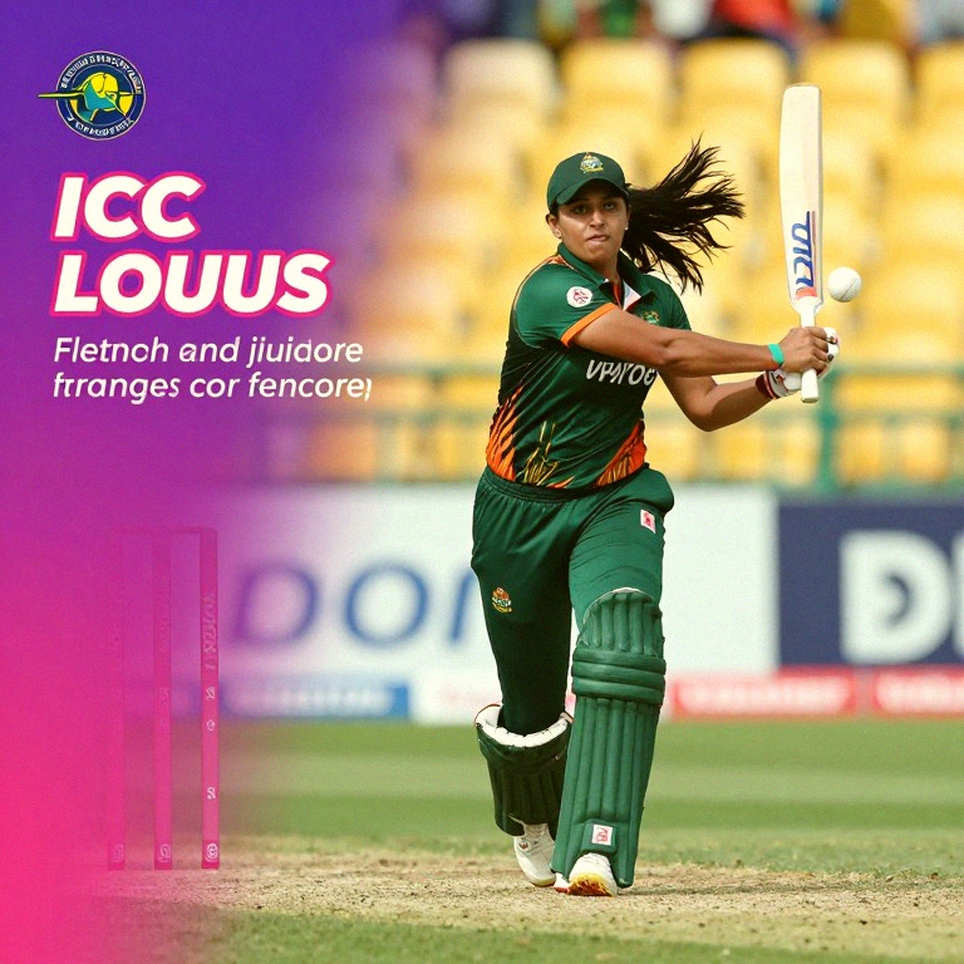
A little more context. Allan Border Field is Brisbane Heat's home ground, and the home side won. The win makes it two from two for Heat, following Thursday's drought-breaking victory over the Strikers. On the other side is Hobart Hurricanes — the reigning champions, the side defending a title, and now four matches without a win. This is the team that lifted the trophy last season, and it is already sitting in a position from which talking about the top four is hard work.
Here is a fact the headline left behind: Hurricanes are playing without their regular captain, Nicola Carey, who remained in Hobart following the birth of her first child. Heather Graham is leading as stand-in captain. I am keeping that separate because when we get to the "champions in crisis" line later, this sentence needs to be remembered — a captain out of the ground and a captain out of form are two entirely different things, and folding them into one headline is not reporting, it is laziness.
Overseas presence was visible throughout — Sri Lanka's Athapaththu and New Zealand's Maddy Green, who made 24. Brisbane captain Georgia Redmayne was run out, the sort of small event that sinks beneath the scorecard and shifts a team's balance.
And now the part I look for in every report and rarely find: what we do not know. The toss winner is not recorded in the material available. There is no weather, dew or DLS information. There is no return date for Carey. Keep those three absences in mind, because they shape every conclusion that follows — and the writer who ignores them to produce a tidy verdict is tidying the report, not the match.
Let us go to the pitch, because the pitch won this game, not the bat.
The powerplay equation is the simplest equation in T20: three wickets inside six overs is not merely three wickets, it sets the ceiling of the entire innings. Hurricanes were 3 for 13, which means six overs of cricket produced thirteen runs and cost them their three most important batting units. The 116 that followed is a story of survival, not of competition. In a league like the WBBL, 116 is almost never a par score; it is the score a fielding side remembers as "we kept them to 116", not "we kept them to 150".
Look at Bassingthwaighte's figures separately: four overs, 16 runs, three wickets, economy 4.00. Anything under seven is good in T20; 4.00 is exceptional. It was her first three-wicket haul in the WBBL — a fact that matters, and a fact that is also a warning. First does not mean habit. More important is who gave her the new ball. Handing the first ball of an innings to a 19-year-old is the clearest statement a team management can make — a statement not delivered at a press conference but in the middle. I trust the first five metres of a run more than the last five paragraphs of a rumour, and Bassingthwaighte's run-up was clean from ball one: no hesitation, no explanation, just line and length.
Dismissing Athapaththu first ball is technically significant and psychologically significant. A ball passing between bat and pad means the bowler put it inside the batter's reach and did not rely on pace — the error fast bowlers make and spinners do not. But let me be honest: one ball is the smallest sample in the world. I have no data on Athapaththu's form in this tournament. So call it a big wicket, not a big shift.
What can be inferred about the surface comes from the shape of the score. Nine wickets fell and 116 still went on the board — that is not one collapse, that is a steady fall, every partnership broken at some point. It is the signature of a pitch where batting was hard throughout. Malgioglio's wicket lends that read some support: a spinner's wicket usually means the surface gripped more as the game went on, which suggests a used or drier pitch where seam helped early and spin later. That inference carries medium confidence, not certainty — no toss, no weather, no pitch report.
The biggest truth of the Hurricanes innings is written in the numbers: Graham 21, Trenaman 25, Green 24. Three batters past 20, none past 30. This is T20's oldest and most expensive pattern — starts without conversion. When three different batters get in and get out, the scorecard shows "no big innings"; what it actually shows is "no big partnership". And the cause of a missing partnership is not always batting weakness — sometimes it is bowling pressure that concedes few runs and forces the batter to break his own tempo. Bassingthwaighte's 4.00 economy was doing exactly that: even when she was not taking wickets, she was not giving runs, and in T20 those are two faces of the same coin.
Now the chase. A target of 116, twenty overs, seven wickets in hand. For any competent side that is a fifteen-over job. Heat took 18.2 and lost six. At 6 for 89 they were not far from the target but they were at the edge of a cliff. That is the moment I hunt for in every column: the third man arrives late; Annie O'Neil came in at the fall of the sixth wicket, and the empty seats kept her time.
O'Neil's innings: 32 not out from 28 balls, a strike rate around 114. The modern T20 finisher benchmark is 180-plus, so the first reaction is that this was slow. That reaction is wrong, and wrong because it reads the number outside its situation. When your side is 6 for 89 chasing 116, the requirement is absorption, not explosion. At 114, the strike rate is not too slow — it is exactly right. In the adapted game, precision is not a smaller version of speed; it is its own weather. O'Neil's value is contextual, not statistical, and that distinction separates a match reporter from a scorecard reader.
But I will not inflate this innings. Ten balls left, chasing 116, six wickets down — that is not a good chase. That is a rescued chase. A stronger side finishes it with seven or eight wickets in hand in the fourteenth or fifteenth over. What happened here is the gap between process and result: the result is a four-wicket win, the process is a stumbling innings. And if you want to forecast the rest of the season, trust the process, not the result.
One more thing belongs in the record of Heat's innings: the same 3 for 13 structure returned in their own chase. Graham and Smith built pressure through the middle, Redmayne was run out, and the side was 6 for 89 at one stage. The weapon with which Heat won — the new ball and early pressure — was working against them too. The difference was that Hurricanes had 116 and Heat had twenty overs.
The most durable part of this whole analysis is Bassingthwaighte's profile. Nineteen, an Australia Under-19 T20 World Cup representative, and a regular in the Heat attack this season. That is the pathway — Under-19 to franchise, and perhaps beyond. This match's 3 for 16 is not proof of that pathway, it is a signal from it. The proof arrives over the next two or three games, once opposing sides have her on video and her run-up in their notes.
And here is something I learned late: I learned the game again from the angle of a rebuilt knee — this time a nineteen-year-old knee. In Indian cricket the hardest team to make is the second XI, and that is decided not by a selection committee but by a body. A 19-year-old fast bowler taking the new ball every game, bowling four overs, playing a franchise calendar is a precious and fragile asset. Her biggest opponent is not the next team. It is next week.
Now the section where I must state the conventional read fairly, and then break it.
The conventional read is this: the reigning champions are four from four defeats, sliding out of the top-four race, their title defence off the rails, and they now need to win almost everything. On the record, that read is correct. 0-4 is a fact, and in a compressed season like the WBBL, 0-4 is a large hole. Denying it would be dishonest.
On cause, though, that read is incomplete, and this is the most overlooked thing about the match. Hurricanes' problem began on the team sheet, not the field — regular captain Nicola Carey is out on maternity leave and Heather Graham has been handed the interim captaincy. That is not merely "one player missing". A captain's absence changes three things at once: the top-order anchor, a middle-overs bowling option, and the habit of decision-making. A stand-in captain cannot be expected to replace all three.
I am not claiming Carey's absence explains 0-4 entirely. I am saying that in the headline that reads "champions in crisis", this fact gets buried — and when a cause disappears from a headline, the reader stops looking for other causes too. It is the most common habit in cricket reporting: turning the result into the story and the cause into a footnote.
The second counter-angle concerns Heat. Calling two straight wins "a team in form" is easy. But here Heat lost six wickets chasing 116 and needed ten balls of margin. That is not dominance, it is management — handling a crisis rather than creating one. If this top order reached 6 for 89 against this attack, where does it reach chasing 140?
The third counter-angle is the story being built around the 19-year-old. "First WBBL three-for", "new-ball destroyer", "Under-19 World Cup player" — all true, and all together a very attractive star-making hook. Media needs those hooks, and I like them too. But fixing a player's ceiling on one match is the mistake we repeat every season. Her talent is real — the pathway proves it. Her level is proven — that is not what this is. The distance between those two sentences is the distance between good and bad sports journalism.
And the fourth, most important: there are things about this match we simply do not know. The toss is unrecorded. Weather and dew are absent. Carey's return has no date. I will not fill those blanks, because filled blanks are the most dangerous things in a report — they read like facts.
So let us decide what to watch next.
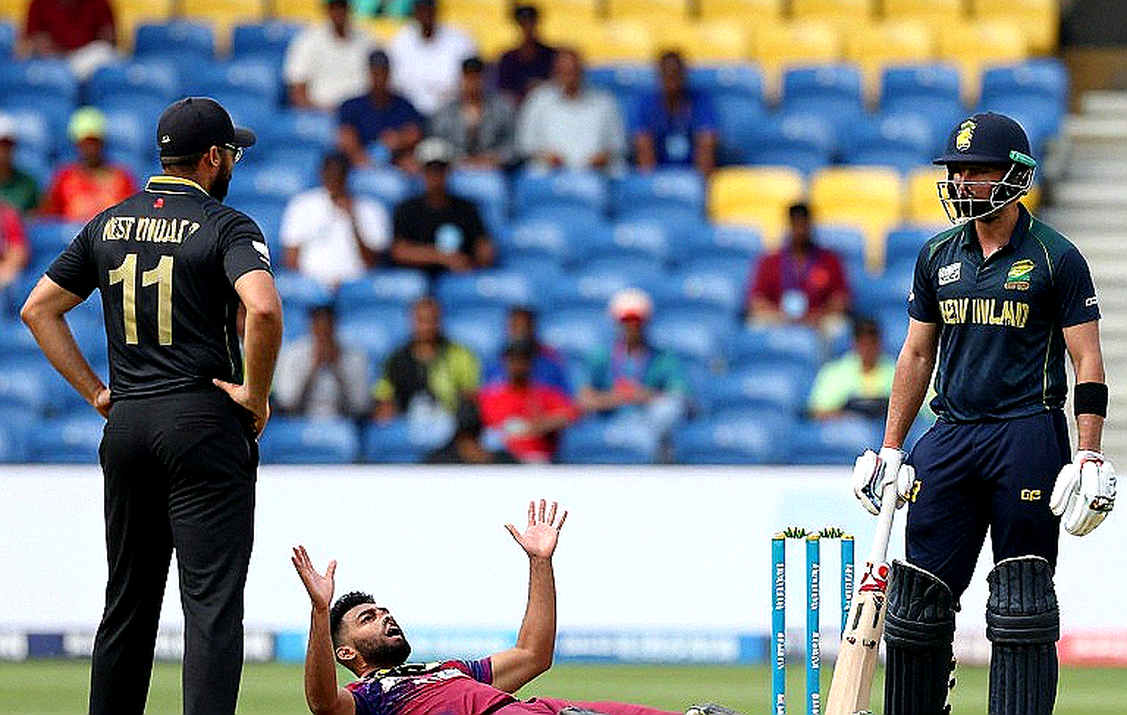
The first signal will come from Hobart's dressing room, not the ground. Nicola Carey's return is the single biggest variable in Hurricanes' season. The day she is back on the team sheet, the "champions in crisis" story recedes on its own, because the side gets back its captain, its anchor and its decision centre. Until that date arrives, every Hurricanes result should be read through that absence, not merely through the points table.
The second signal is Bassingthwaighte's next two new-ball spells. If her economy stays under six across the next two or three games, that is not a good day, it is a forming habit. If opposing sides start attacking her run-up, that too is normal and necessary development. Either way, the next four matches will say more about her career than this one did.
The third is Heat's top order. Losing six wickets chasing 116 is one thing; the same slide chasing 150 is another. If O'Neil has to rescue the side repeatedly from six down, that stops being strength and becomes dependence — and dependence never scales.
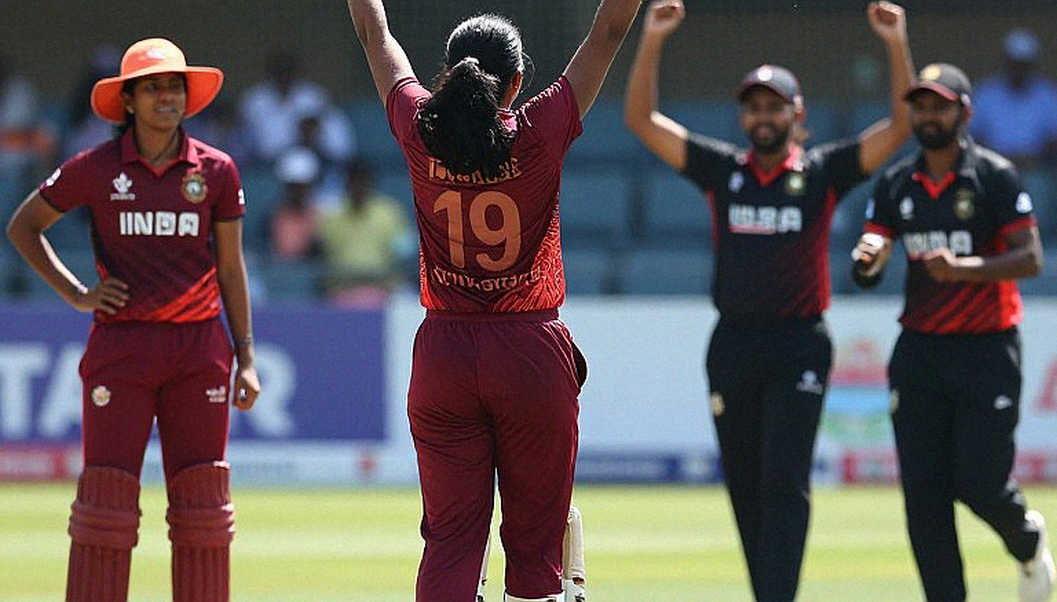
One last image, the one my notebook kept from this match. After the innings ended in Brisbane the ground began to empty, and it struck me that the right way to remember this game is not the scorecard. It is this: a 19-year-old with a new ball in her hand, an international star in front of her, and six overs later a champion team at 13 for 3. The other fourteen overs came after. The match was before them.